In this long, antagonised slow dance
We swapped warts,
and erasure.
You showed me your castration,
then I showed you mine.
“OK!”

In this long, antagonised slow dance
We swapped warts,
and erasure.
You showed me your castration,
then I showed you mine.
“OK!”
You never call me by my name
While I always call you by your name
Because your name, as common as it is, dances on the tip of my tongue
Rapidly gathering an emphatic materiality — a weight, a momentum, a fullness
That can only be released through the larynx.
I don't call other names orally

You never call me by my name though
As if it’s a top secret that cannot be uttered
As if it’s an impossible melody to hum
As if it’s a regret life cannot afford
As if it’s a bell ring that would trigger
A crumble of you
The literal aching
of this physical organ
That is heart
In the pitch-dark insomnia
Full-bodied pain
Nowhere to escape
Do I have to do this again?
The only counterpoint
The nuclear force, the tsunami
To trigger
A tidal wave of intensity, in equal measure
To soak wounds
Is this my trying to preserve fragments
Of our last love making?
Lilac, eagle twist, spikes that could punch a hole in your heart
Piecing pleasure was mine
The same yet different look in your eyes
Were you weeping?
When turning away from me in darkness
I
was
simultaneously
turned on
and
immensely saddened
at your voice, your reading;
I
threw myself
into bed
sobbing
and coming.
The thought of Mum hit me
Out of the blue;
I was jogging on Bowen, preoccupied with something else, while having Podcast on
A favourite cultural critic was trashing a one-time bestseller;
About positive thinking with a funny title
She presented to me many years ago, as a sort of gift;
“What a silly book,” then I said
Sent it away to whom I can’t remember;
Now
My heart has grown more capacious and tender
But Mum is gone.
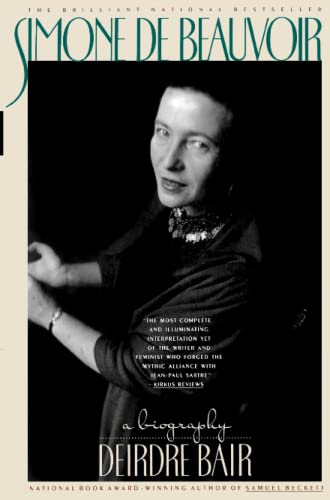
I started to read Simone de Beauvoir at perhaps 21, and has continued to read her and read about her until this present moment. Over the years my understanding of her thought and her life has radically changed, but I always recognise this early encounter with her in my formative years shaped the course of my life up to a good degree.
Her biography by Deirdre Bair is a brutally honest portrait of a woman who clearly heard the unmistakable sirens of the heart but always chose to align with the head’s preoccupations. As an adolescent, I was anxiously enchanted by what I then romanticised out of her life; as a maturing adult, I was weirdly consoled by what I now see as amounting to debunking of a myth – especially her mythical alliance with Sartre. That’s why this biography is brilliant – hers is a life of existential struggles everyone faces, but her response to life’s essential problems was direct, explicit, unapologetically self-centred and self-serving.
Beauvoir admitted to a kind of self-absorption which precluded any genuine sympathy or understanding of the needs of others, not only of a casual friend but of closer friends as well. People interested her then only insofar as they contributed to what she expected of herself or wanted from them. They all stayed within the boundaries of the space she had assigned them in her life, and so they never required any kind of emotional engagement from her other than what she directed and controlled.
She had everything and everyone slotted into neat little compartments, all seemingly willing to rest in suspended animation until she declared that it was time to take them out and start the movement of their lives as she wished them to be entwined with hers.
Her essential self was formed very early on due to an intensely disciplined childhood and adolescence, when she needed to “explained myself to myself.” Nothing really shook that core (her American lover Nelson Algren was only remotely close…but still on the peripherals). The irreplaceable status Satre had in her life was precisely because his solidified her core. There was the presence only of essentials. It was an uncluttered kind of life (despite surface chaos), a simplicity deliberately constructed so that they could experiment their beliefs via living.
In my younger years, I looked upon admiringly the Sartre-Beauvoir pact and how they elevated the contingency into a principle. Contingency worked for them, but only for them. Jealousy is an emotion Sartre genuinely lacked, while all through their relationship, Beauvoir had wisely, carefully insulated Sartre from having to choose between her and someone else, knowing instinctively that if he did, she might well be the loser. Other women had issued ultimata and they lost every time.
But we had become necessary to each other in a way that I don’t think people ever really understood…It’s true, we knew each other so well, no one ever understood us as we understood each other. But rather than to see us as senile old people, too lazy or too tired to change, they should have said that all our shared experiences made us supremely at ease and comfortable with each other.
What they shared was fundamental and irreducible. That responsibility one has for oneself – something that mustn’t be outsourced. Beauvoir on her teaching:”to teach them how to think, then how to think for themselves, and never what they should think.”
In a similar vein, Sartre on why he was writing about Flaubert. “Because he is the opposite of what I am. I need to rub against everything that puts me into question. In The Words I wrote, ‘I have often thought against myself.’ That sentence has never been understood…But in fact, that’s exactly how one should think: one should always be questioning one’s own assumptions.”
Nelson Algren had disturbed Beauvoir’s rigidly defined, self-controlled world when he showed her that passion and reason could indeed be present within a single man and offered her the opportunity to be part of the traditional male-female couple she had always scorned as an “impossible contrivance of fools who write romance.”
She also told him she was “mad with love and happiness,” but he should not come visit before when she would be finished with The Second Sex. How interesting that, in a relationship composed in equal parts of physical attraction and intellectual respect, she was restrained enough to place a higher priority on reason than on passion. Her reply is especially curious, since her letters are filled with effusive descriptions of her yearnings and dreams, all thinly veiled accounts of sexual longing…”nice girl…on the bad side of forty…with a number of flaws and bad habits, who hasn’t slept with a man in Paris for two years.”
Algren was like a dream come true for me, and I did not want anything to spoil it. Yes, all right: I too was like Sartre. I wanted to avoid confrontation, I wanted everything to be nice.” She told Algren that no one would ever love him more than she did, but added, “I cannot leave Sartre. I am his only true friend, and I owe him a great debt for all that he has done for me for more than twenty years. I would rather die than leave Sartre.
Alcohol was perhaps the other object that served to loose up Beauvoir’s structured life. In 1982, She described her drinking habits since 1950:
I like to drink very much. Since Sartre’s first illness, it has become for me an element of equilibrium. In general, I have, let’s see, one or two vodkas before lunch, and then in the afternoon I have two or three scotches during the day. I drink very little wine because I don’t like the taste anymore. But [vodka and scotch] in my opinion is necessary for me now…the drinking I do during the day and the evening – that, for me, is essential. I need that.
I paid extra attention to how she dealt with ageing, something I’ve started to think a lot about. She had been obsessed with the idea of death from the time she was a child. She thought of herself as old, or “too old” for one thing or another, for almost her entire life, from her sadness at being “too old” to sit on her mother’s lap to her idea of herself as “too old” for physical passion at the beginning of her affair with Algren, when she was in her late 30s. It was as if from her earliest rational moments in childhood she began to prepare herself for people and things to be taken away from her.
Her fear of old age really had several different aspects to it: she was the woman who witnessed the change in her own body with horrified fascination, powerless to stop the inexorable biological clock; hers was also the detached, observant eye of the writer and social critic who could understand and accept what was happening to her only by putting it into an impersonal context and then speaking of it personally. “Old age,” she mused, “but they are all young, these people who suddenly find that they are old. One day I said to myself: ‘I’m forty!’ By the time I recovered from the shock of that discovery I had reached fifty. The stupor that seized me then has not left me yet. I can’t get around to believing it.”
The sight of her own face upset her: “I loathe my appearance now: the eyebrows slipping down towards the eyes, the bags underneath, the excessive fullness of the cheeks, and that air of sadness around the mouth that wrinkles always bring.” She was 51 when she wrote this, and photos taken then show a woman whose physical appearance is the exact opposite. Here is an enviable youthfulness – in everyone’s eyes but her own. “Death is no longer a brutal event in the far distance,” she wrote at age 51. “It has already begun.” “…because I was an old woman. I would be alone from this moment for the rest of my life.”
To deal with memories of Sartre after his death (six years before hers) meant expressing emotion, which was always difficult if not impossible for Beauvoir unless she could find a way to control it at the same time. I always think this inability to give in to emotion is the main reason why her novels are much less readable than her autobiographies. Those fictions are almost monotonous and dull (compared to her real life).
What struck me hardest was how her relationship with Algren ended.
Algren never forgave Beauvoir, and his vitriol against her in his last days was as fresh as it had been when they parted 16 years previously:
She tried to make our relationship into a great international literary affair, naming me and quoting from some of my letters. She must have been awfully hard up for something to write about…Hell, love letters should be private. I’ve been in whorehouses all over the world and the woman there always closes the door…but this woman flung the door open and called in the public and the Press…
Beauvoir kept Algren’s letters in her apartment, on the sleeping loft near her bed (whereas she dumped Sartre’s manuscripts unceremoniously into her cellar storage area). When news of his last comments reached her, she waved a handful of them and said, “You have to make it clear that I lied in all those letters” written to him. Then she averted her eyes and muttered, “Everything was a lie,” before refusing to discuss it further, insisting that her memoirs contained the truth “of a not very important love affair.”
“Don’t you feel anything for him?” Her sister asked.”Why should I?” she replied. “What did he feel for me, that he could have written those horrible things?” However, she continued to wear his ring.
I was immensely saddened but weirdly consoled at the same time upon reading this.
The most enduring love affair of my life started in 1990 and almost felt to have come full circle this early morning. If the waiting and longing was almost as long as your adult life – saturated with highs and lows and everything in between in such an intensity that rendered Hope itself distorted despair – then when the moment finally came, I was a bit at a profound loss as if it’s not true.
Time is the greatest magician – I’ve sublimated all my raw energies into a fumbled pursuit of what I only later learned was ignited in that magic summer. That contingent but electrifying touch of my biological core proved to be vital, undoing what I had been. Look at me now.
You can only speak of what you love lightly – just like this 16-year overdue kiss Lionel Messi placed on the Jules Rimet trophy – so destined yet the tenderest.

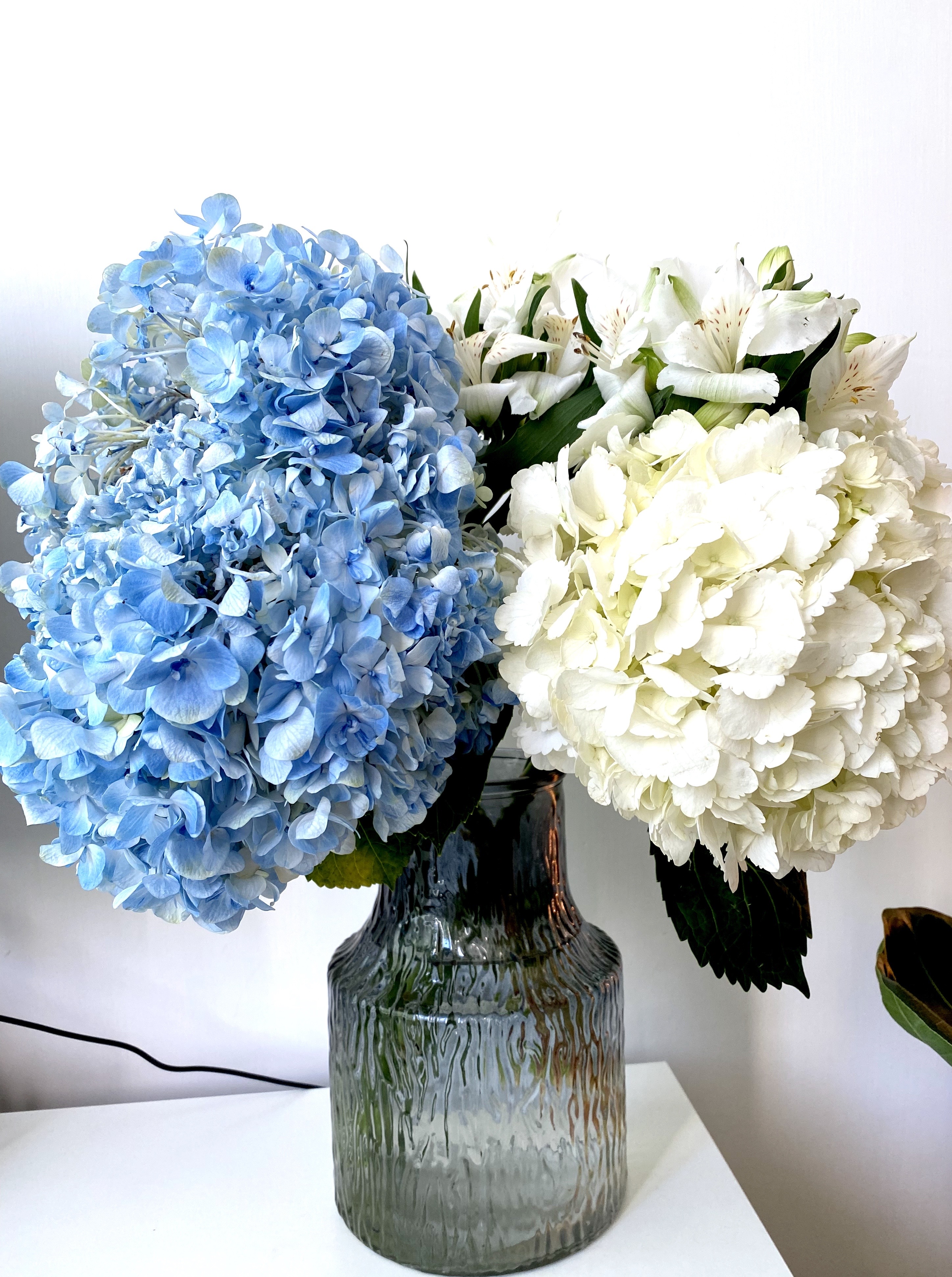
The paradoxical relationship between the positive and the negative – it’s elemental in the Universe. Two sides of one coin; Ying & Yang. If someone can make you happy, they can also frustrate you. Those to whose feelings you’re immune to, wouldn’t be able to elate you either. This is ineluctable, coz it’s structural.
To see a World in a Grain of Sand
And a Heaven in a Wild Flower
Hold Infinity in the palm of your hand
And Eternity in an hour…
Man was made for Joy & Woe
And when this we rightly know
Thro the World we safely go
Joy & Woe are woven fine
A Clothing for the soul divine
Under every grief & pine
Runs a joy with silken twine
William Blake “Auguries of Innocence”
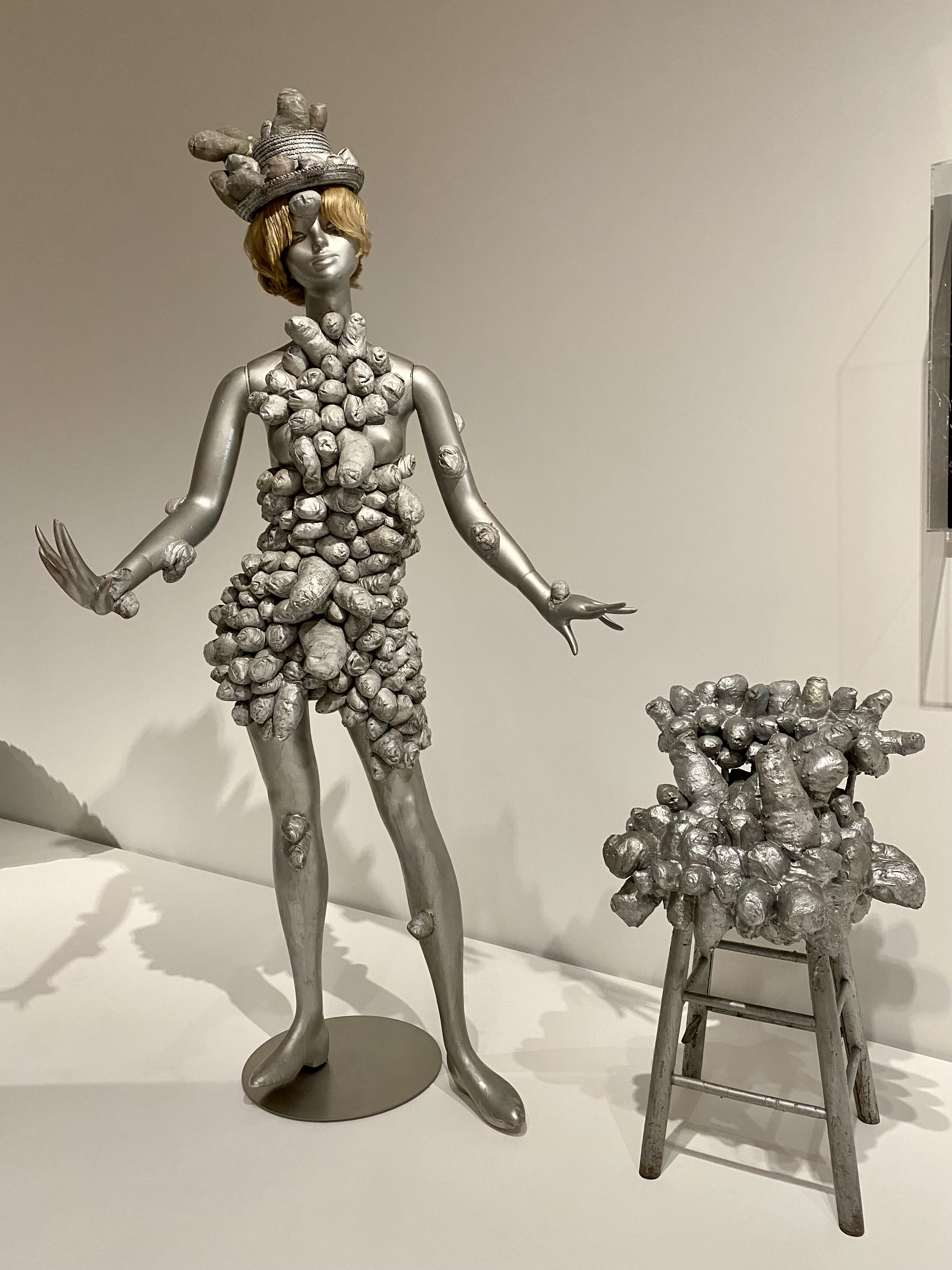
Yayoi Kusama – 1945 to Now @ M+
Be patient toward all that is unsolved in your heart
and try to love the questions themselves, like locked rooms
and like books that are now written in a very foreign tongue.
Do not now seek the answers, which cannot be given you
because you would not be able to live them.
And the point is, to live everything. Live the questions now
Perhaps you will then gradually, without noticing it,
live along some distant day into the answer.
— Rainer Maria Rilke
It took a while
But it becomes rather clear now –
You couldn’t have done otherwise
I couldn’t have done otherwise;
It would have to take an entirely different universe for the otherwise to happen.
Aligning with
A line by a favourite poet:
“It is better for the heart to break, than not to break.”
What is older than desire?
the bare tree asked.
Sorrow, said the sky.
Sorrow is a river
older than desire.
(Robert Hass)
I was dead serious
It’s you who were deeply casual
And managed to flip it
What a cosmic joke;
I faked freedom
To be a Free Woman
You imposed responsibility
In your pursuit to be a Better Man
Neither enterprise was real
It’s a cosmic joke;
Am a sucker for beauty
You crave the same stuff
But worked yourself, unwittingly, into wanting
Something more acceptable and recognisable, more imaginable and foreseeable
And perhaps more commendable and even conceptually noble in your universe
What a cosmic joke!
Feel compelled to have this today:
By W.H.Auden
Time will say nothing but I told you so,
Time only knows the price we have to pay;
If I could tell you I would let you know.
If we should weep when clowns put on their show,
If we should stumble when musicians play,
Time will say nothing but I told you so.
There are no fortunes to be told, although,
Because I love you more than I can say,
If I could tell you I would let you know.
The winds must come from somewhere when they blow,
There must be reasons why the leaves decay;
Time will say nothing but I told you so.
Perhaps the roses really want to grow,
The vision seriously intends to stay;
If I could tell you I would let you know.
Suppose the lions all get up and go,
And all the brooks and soldiers run away;
Will Time say nothing but I told you so?
If I could tell you I would let you know.
Peeling off layers of my skin, it unveils
Asymmetrical structure
Utilitarianism has never guided me, for better or for worse
Love is a social construct
Atypical — that’s you for me — I somehow only had recourse to my childish provocation, but you’re a child too!
Regret has been a raging flame, hard to smother
Mother’s death only detoured that path of longing
Sex is the axis around which life turns — I couldn’t agree more
(Tomintoul turns out to be the spirit to nurture this verse)
Running is your specialty, for better or for worse
Off to an island that doesn’t have a pulse (but a reassuring emblem — a protective shelter, a motherly figure, a kind of union — could just do)
Never would I ever believe I could be, um, one day haunted by tattoos
Generally speaking — you’re wrong (and the Horse and the Rider…who is riding who?)




 Gracefulrock's Blog