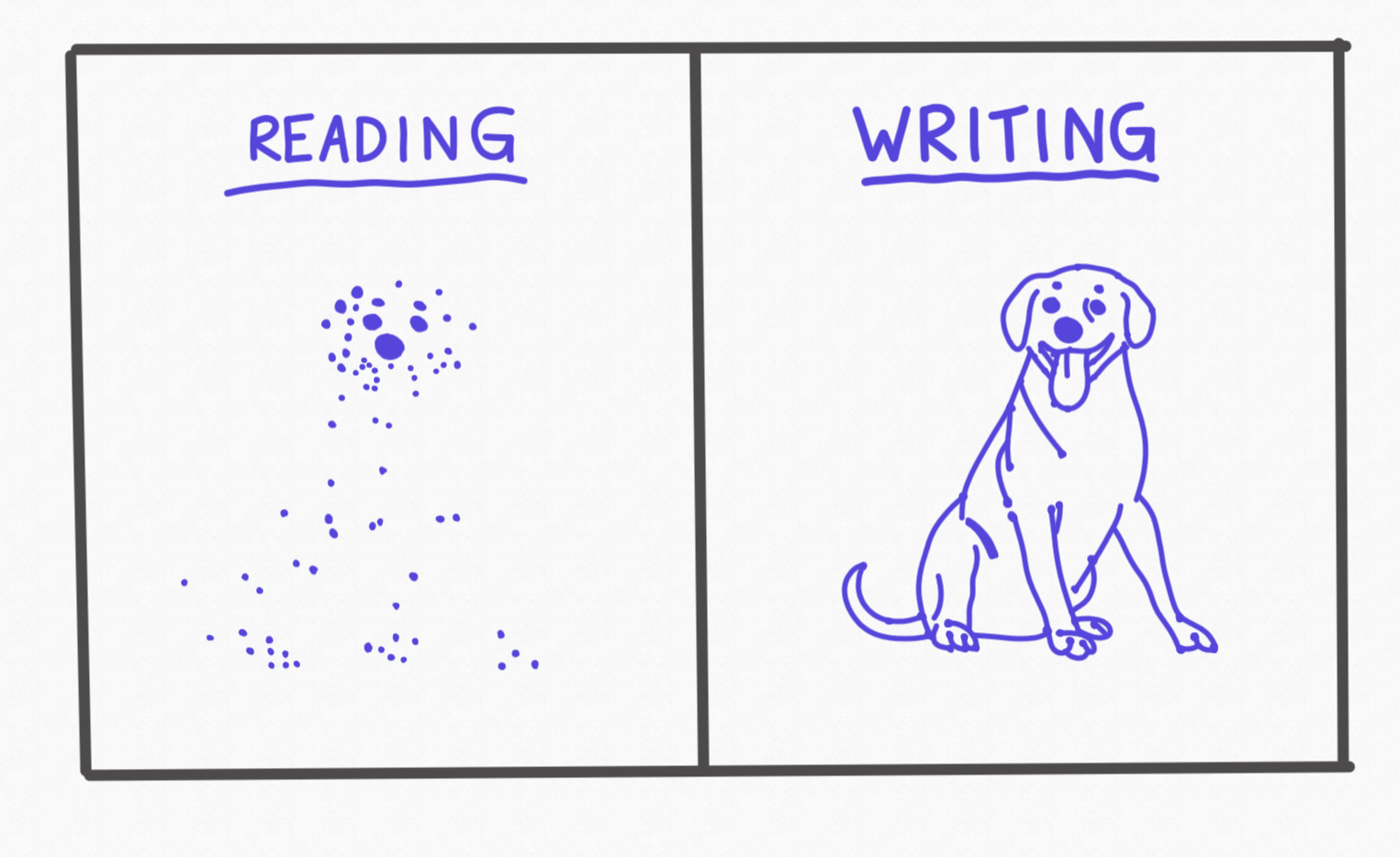
Reading vs Writing

The paradoxical relationship between the positive and the negative – it’s elemental in the Universe. Two sides of one coin; Ying & Yang. If someone can make you happy, they can also frustrate you. Those to whose feelings you’re immune to, wouldn’t be able to elate you either. This is ineluctable, coz it’s structural.
To see a World in a Grain of Sand
And a Heaven in a Wild Flower
Hold Infinity in the palm of your hand
And Eternity in an hour…
Man was made for Joy & Woe
And when this we rightly know
Thro the World we safely go
Joy & Woe are woven fine
A Clothing for the soul divine
Under every grief & pine
Runs a joy with silken twine
William Blake “Auguries of Innocence”
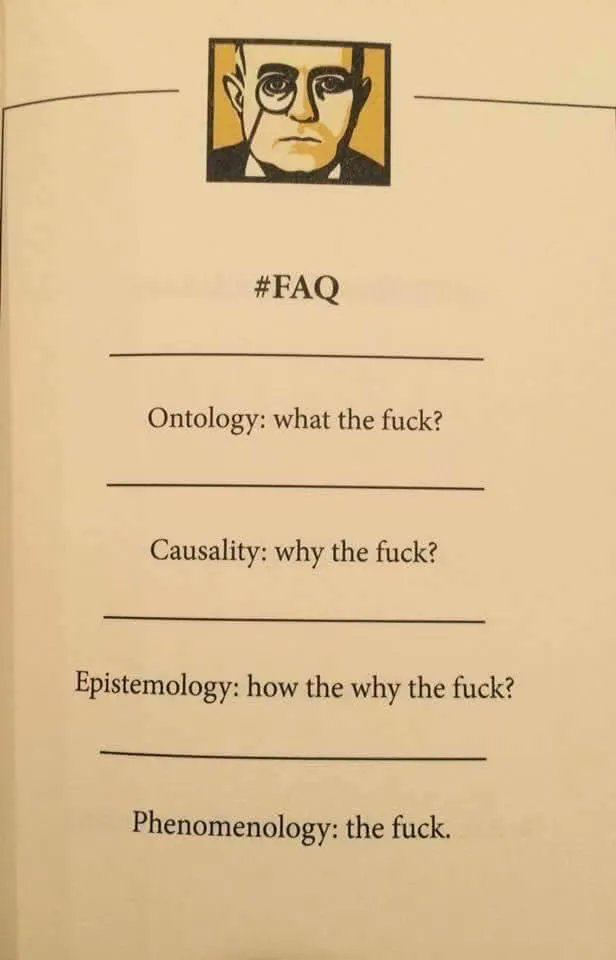
Journalism: Who, What, When, Where and Why the fuck, in a sound bite.
This is a very interesting experiment — what exactly happens to the patients parts of whose orbitofrontal cortex (which plays a central role in regulating emotional feelings whether to approach or withdraw) are damaged so that they lost most of their emotional lives. Their reasoning and logical abilities are intact and they can perform normally on tests of intelligence. When these people go out into the world, you would assume these people are free of emotional distractions and able to see through the haze of feelings that blind the rest of us and achieve perfect rationality.
Just the opposite. They found themselves unable to make simplest decisions or set goals, and their lives fall apart. When they look out at the world and think, “What should I do now?” They see loads of choices but lack immediate internal feelings of like and dislike. They must examine the pros and cons of every option with reasoning, but in the absence of feeling, they see little reason to pick one over another.
Human rationality depends critically on sophisticated emotionality. Along a similar line, it’s hard for the controlled system to beat the automatic system by will power alone. That’s why all self-control would fail eventually if it’s up against one’s true desire.
Last day of 2010 — I read an article on Boredom (Boredom Enthusiasts Discover the Pleasures of Under-stimulation) and bought a book on Exuberance.
And I cooked a beautiful pot of mung bean soup for myself.
May next year be filled with genuine exuberance for life.
Two ways to apply for a Vietnamese visa — one is to line up in front of the Vietnamese consulate the other is much simpler and easier — apply on line and get your visa upon arrival. My indecision is completely hereditary, or more accurately, one clear parental imprint. Mom always prepared six pencils for me before every exam just in case — see the link?
Had a few drinks with a young girl at Soho. She is only 24 and still got a whole life ahead of her. I can’t say I’m not jealous. But I would not want to return to the 20s — young and stupid and easily scared. Now am halfway through. Had my fair share of regrets already.
Robert Burton called it “gut feeling” — “involuntary mental sensations that function independently of reason”. William James described it as “felt knowledge”, something extraordinarily difficult to be dislodged through rational arguments. I call it “intuitive knowledge”.
Cognitive scientists now seem to believe the bulk of our thoughts originate in the areas of the brain inaccessible to conscious introspection. The trick in Chris Nolan’s “Inception” — the planting of an idea in human mind — if it can ever work, we have to sort out where to plant it first. Thoughts arrive in consciousness already coloured with inherent bias. Our perceptions are filtered through our genetic predispositions, biological differences and idiosyncratic life experiences. Your red is not my red. These differences extend to the very building blocks of thoughts. Thinking may be as idiosyncratic as fingerprints.
Illusion is also a form of perception. If you think you can actually see the world as it is, you are in illusion.
Certainty is not biologically possible. We must learn to tolerate the unpleasantness of uncertainty.
Megi spared us. It turned out to be a gorgeous day — crisp and bright. What an irony — we splashed it at least twice.
Was reading “Loneliness” at a cafe in the early afternoon. John Cacioppo, the author — social neurologist with University of Chicago — spent some 30 years studying how people make social connections and how important they are to human life. I want it to be scientifically proved that intimacy is a basic human need, and loneliness harms personal well-being. Why would I want to justify my need for human connections? Because I imbibed from my early environments that self-reliance is a virtue. Also tried UCLA Loneliness Scale. Scored 44 — that’s the cut-line for high loneliness.
The author also argues, loneliness has its evolutionary value — it got built into our genes early on, because we survived by being stuck together, and its role lies in, it manifests itself as an acute pain and like any form of pain would make us pause and examine our behavior pattern; this social pain protects us from remaining isolated. It serves like a warning bell. Well, apparently, my warning bell has been singing all the way…
The most alarming bit, is loneliness does get to change, however slowly, the loner’s perception. Through this warped lens of lonely social cognition, others may appear more critical, competitive and denigrating than they really are. We might preemptively launch direct or indirect attack to fend off imaginative opponents. Thus, loneliness impairs our healthy self-regulation system and our ability to detect others’ perspective. Loss of orientation.
Watched a German movie in the afternoon. Fandango. Its mediocrity resulted in my early flee from the AMC cinema. Many references were American — Why?
 Gracefulrock's Blog