Eat Like A Yogi

We need to learn how to use our six senses, our own personal experiences of trial and error. The climate, activities of the day, stressors, and physical symptoms are things that help us determine daily food choices. We, as part of nature, are also in a constant state of flux. An important part of the flexibility we cultivate in yoga is being able to be flexible about our food choices, tuning in every day, at every meal.

To increase your food flexibility, don’t simply accept the “rules” of others for what, when, and how much to eat. Question and explore for yourself. For instance, if you’re told that yoga practitioners don’t eat for seven hours before a practice, question it: “Does that sound like a good idea for my system? How do I feel if I go without eating that long? What are the benefits for me? What are the detriments?” Getting more and more bound up by rigid rules and restrictions, such as inflexible food dos and don’ts, only serves to further imprison us.

Just as you work in a yoga posture to align and realign with your inner core, so you can learn to recognize what foods your body needs. By bringing attention to your internal sense of what is appealing and what effects different foods have on you throughout the eating and digestion process, you will gradually learn to recognize exactly what your body needs and when you need it.

But this too should be practiced in moderation-becoming obsessed with tracking every sensation can quickly hinder rather than promote balance.

In both food and yoga practices, it’s essential to remain alive, conscious, and present in the moment. By not adhering blindly to strict rules or rigid structures, you can allow the process itself to teach you the best way to actually go about the practices.

If you are able in this way to keep all of your “systems” open, through the joy of exploration and unfolding curiosity, you can continually rediscover your own individual paths to balance.

Sacred Pause

Take the pause from time to time, and ask what I really care about; accept the actuality of what’s happening inside me, whether it’s hurt, regret, shame, anger, or ambiguity…then life becomes aligned.

In

Out

Deep

Slow

Calm

Ease

Smile

Release

Present Moment

Wonderful Moment

Only Moment

“Bring Something Incomprehensible into the World!”

Joy! New discovery of a great mind and also rediscovery of the empowering morning jog.

Gilles Deleuze — postwar continental heavyweight whose philosophy is fiercely fresh and completely disconcerting — is a man who believes in secrecy and spent most of his life by staying where he was. “If I stick where I am, if I don’t travel around, like anyone else I make my inner journeys that I can only measure by my emotions, and express very obliquely and circuitously in what I write. … Arguments from one’s own privileged experience are bad and reactionary arguments.”

But still, this was a life lived to the fullest — despite the fact he’s been suffering from debilitating disease for a quarter of a century and described himself “like a dog chained to an oxygen machine”. The inner journey he took, those internal sojourns…were a true testimony to what Proust once famously said: “The real voyage of discovery consists not in seeking new landscapes but in having new eyes.”

For Deleuze,  to live well is to fully express one’s power, to go to the limits of one’s potential, rather than to judge what exists by non-empirical, transcendent standards. Modern society suppresses difference and alienates persons from their true potentials. To become what we can become, we must at least try to subvert conventionalities, overturn established identities and take a fresh look at sedimentated concepts. For him, philosophy is the construction of concepts, and those concepts are not merely propositions but metaphysical constructions that can render intelligible reality — which is a flux of change of difference.

I like his epistemology — there’s no neutral point of view that one can arrive at after rigorous thinking; and philosophy is no disinterested pursuit that results in a fixed set of truth. Deleuze thinks genuine thinking is a violent confrontation with reality, an involuntary rupture of established categories. Reason is always a footnote to irrationality.

I like how he differentiates among philosophy, arts and science. Philosophy deals with concepts, arts with sensation and feeling, and science raw data from natural world. They’re different ways of organizing metaphysical influx. I especially like what he said about cinema — he doesn’t treat cinema as representing external reality, but takes it as an ontological practice of creating different ways of organizing movement and time.

So for him, the pinnacle of human practice, is creativity.

“Herein, perhaps, lies the secret: to bring into existence and not to judge.”

Berry Daiquiri

Maybe I’ve been hanging out too much with disturbed and deranged people, am now slightly at a loss over a simple man with a good heart.

But how I love it! So I feel that urge again … to read a poem.

Stretched out,

Stone made of noon,

half-open eyes whose whiteness turns to blue,

half-ready smile.

Your body rouses, you shake your lion’s mane.

Again lying down,

a fine striation of lava in the rock,

a sleeping ray of light.

And while you sleep I stroke you, I polish you,

slim axe,

arrow with whom i set the night (or the morning) on fire.

The sea fighting far off with its swords and feathers.

(Octavio Paz)

Blue Valentine

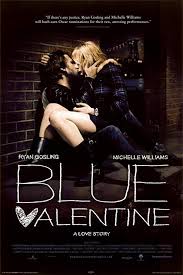
Watched “Blue Valentine” today. Was not as good as I expected to be, probably because it’s  the same genre movie as Sam Mendes’s Revolutionary Road and François Ozon’s masterpiece 5×2; in the inevitable comparison, it only pales beside the latter two. But still, am a big sucker for flicks that handle how relationship disintegrates. Besides, Gosling’s cunnilingus performance was very real!

The Wait

It is life in slow motion,
it's the heart in reverse,
it's a hope-and-a-half:
too much and too little at once.

It's a train that suddenly
stops with no station around,
and we can hear the cricket,
and, leaning out the carriage

door, we vainly contemplate
a wind we feel that stirs
the blooming meadows, the meadows
made imaginary by this stop.

              -- Rilke

Let it Simmer

Nothing has really happened just yet. But that might be for a reason. The only consolation I could use: am no fan of immediate gratification.

Only the third week into the new year, but I already saw the light out of the tunnel!

(And so Sally can wait…)

Beau-ti-ful

Two things happen if I feel that tickle at my heart. I read/write poetry and I dress myself more nicely than usual.

Sex makes many demands, and somehow it seems wisest to respond to them without necessarily taking them at face value. What we repress return to us.

Bacchanalia (J.B.Bernstein)

I lie
Before you soaked
in white orchid, its redolence
assails like devil’s fire. And when
you sheathe my body
with your flame, I get drunk
from the blood of you  the flesh of you.
Then, when the new moon mounts
black sky, I inhale your breath
and pray to you: Swallow me
alive.

New Moon

The first week of the new year, is slipping through my fingers.

A couple of fine stories, a stepped-up pace after a long vacation, a new found love for hardcore journalism, some potential ripples in life — that tickle at my heart…glad I’m still able to feel it.

I want to place my lips on a tender spot tonight.

Bye Bye Blackbird!

This is a very interesting experiment — what exactly happens to the patients parts of whose orbitofrontal cortex (which plays a central role in regulating emotional feelings whether to approach or withdraw) are damaged so that they lost most of their emotional lives. Their reasoning and logical abilities are intact and they can perform normally on tests of intelligence. When these people go out into the world, you would assume these people are free of emotional distractions and able to see through the haze of feelings that blind the rest of us and achieve perfect rationality.

Just the opposite. They found themselves unable to make simplest decisions or set goals, and their lives fall apart. When they look out at the world and think, “What should I do now?” They see loads of choices but lack immediate internal feelings of like and dislike. They must examine the pros and cons of every option with reasoning, but in the absence of feeling, they see little reason to pick one over another.

Human rationality depends critically on sophisticated emotionality. Along a similar line, it’s hard for the controlled system to beat the automatic system by will power alone. That’s why all self-control would fail eventually if it’s up against one’s true desire.

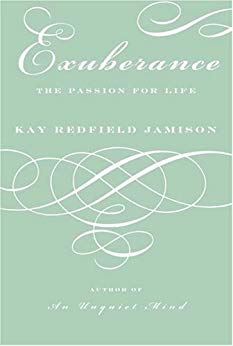
Last day of 2010 — I read an article on Boredom (Boredom Enthusiasts Discover the Pleasures of Under-stimulation) and bought a book on Exuberance.

And I cooked a beautiful pot of mung bean soup for myself.

May next year be filled with genuine exuberance for life.

The Confessions of A Snob

Last day in Nam and already looking forward to returning to Kong. I can never fully relax when traveling. My life has been highly structured. I long for returning to those daily routines like long walk up the hills, morning reading, afternoon drinks, and late night jazz.

Like Schopenhauer once said and I catastrophically came across at an impressionable age, life swings like a pendulum backward and forward between pain and boredom; my longing — or human longing — is constantly moving between adventure and security.

Yesterday, after a quite good trip to Ha Long Bay, I still came to conclusion that I tend to like travelling in more developed places (gasp!). As much as I love the beauty of Mother Nature, I am equally appalled by its philistine nature.

Saigon, Saigon

Was sitting at this lovely cafe “Green Leaf” sipping Pina Colada and surprisingly, they’ve got free WiFi! Facebook is also blocked in Nam, I discovered.

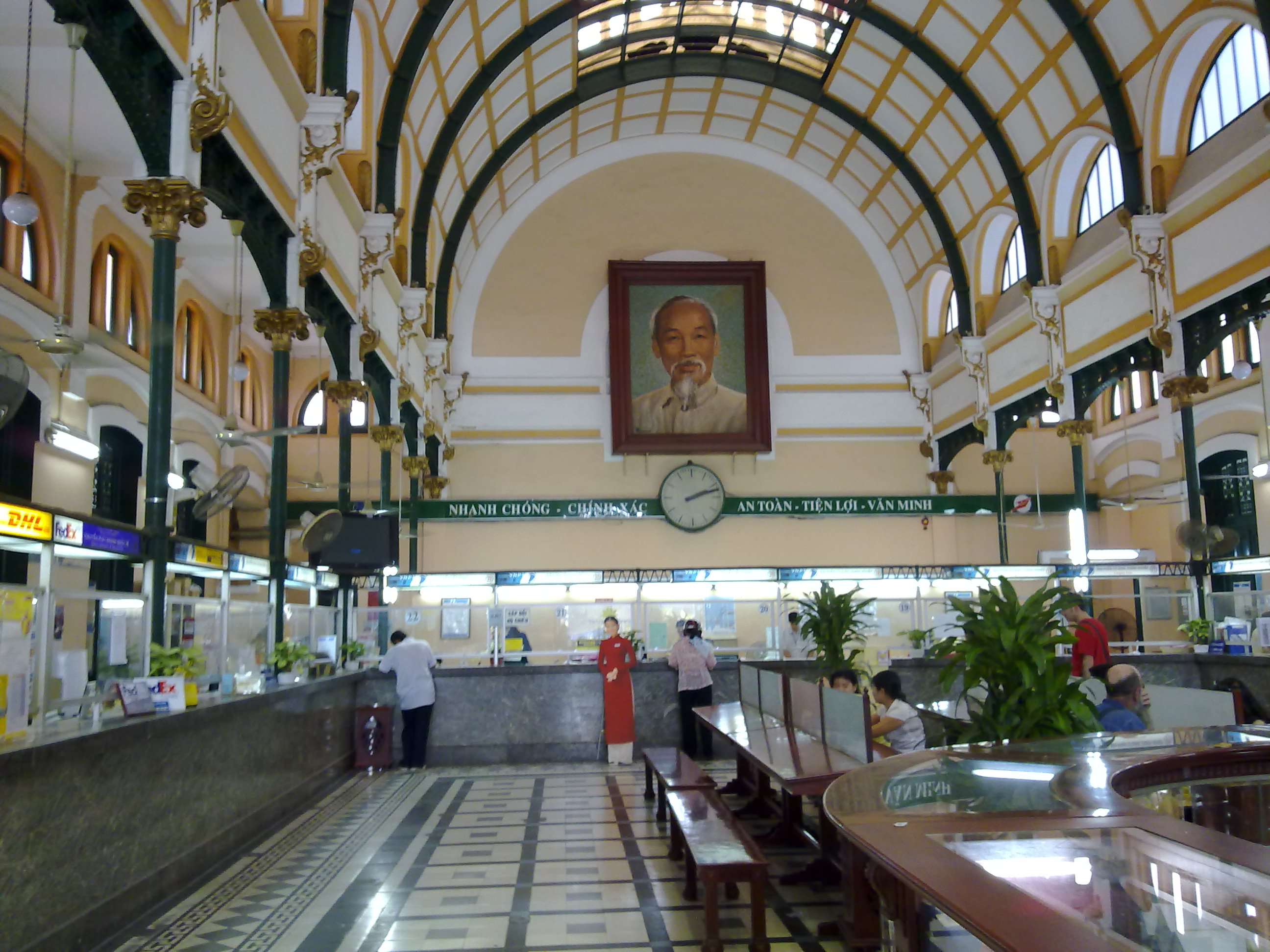
Ho Chi Minh City looks like a second-tier Chinese city at the level of Ningbo or Nanning. Thousands of maddening cyclos were roaming along every street, which looks dusty and rundown even in its most hustle and bustle district. The sense of anarchic madness kicked in when I was applying for the visa-on-arrival at the HCM airport — everyone was queuing the wrong queue and didn’t know what to expect. Finally it was my turn, this small, dark, emotionless Vietnamese guy was as terse as possible, to the point I was completely clueless whether I was in the right queue or not. I waited for about 20 minutes before he used his eyes to direct me to the sideways. And then came this Vietnamese cab driver who didn’t speak a word of English and somehow thought I was going to check into InterContinental, even though I repeatedly said my hotel is Hotel Continental Saigon (Which was the setting of Graham Green’s The Quiet American).

Got a lovely letter from Down Under. That, along with a glass of Pinot Grigio at the pavement table watching maddening traffic around me, made my day.

Wandering around a bit in the hotel area — it was totally mad with all sorts of piercing sounds clashing into each other. For many Vietnamese people, the favorite pastime seems to be sitting around on the stairs in front of an inhumanely gigantic shopping mall; and for many young people here, hugging (literally) brand name logos for a photo is THE thing to do.

It’s late now, but thanks for massive noises outside my window, I could only half-sleep.