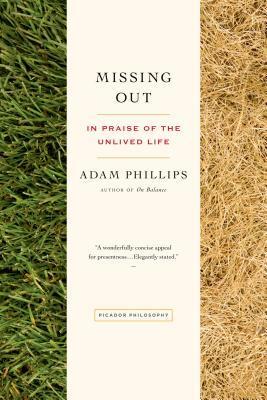
For Adam Phillips, psychoanalysis is a set of stories that we tell ourselves and each other, a way of redescribing our experiences. “To begin with, one needs to understand,” he says, “but I think the final project is to relieve oneself of the need for self-knowledge. It’s not that it’s useless – in some areas of life it’s very useful – but there are lots of areas in which it isn’t, and in some areas it’s actually preemptive and defensive, and this is where psychoanalysis potentially fails people, by assuming there is an infinite project and that the best thing you can do in life is to know yourself. Well, I don’t think that’s true.”
Good analysis is — “Analysis should do two things that are linked together. It should be about the recovery of appetite, and the need not to know yourself.” Because “how much your wish to know yourself is a consequence of an anxiety state”.
“What psychoanalysis, at its best, does is cure you of your self-knowledge. And of your wish to know yourself in that coherent, narrative way. You can only recover your appetite, and appetites, if you can allow yourself to be unknown to yourself. Because the point of knowing oneself is to contain one’s anxieties about appetite. It’s only worth knowing about the things that make one’s life worth living, and whether there are in fact things that make it worth living.”
This makes me ponder whether P’s rapid withdrawal and even rapider run to an instant family (immediate security) indicate his reflexive resistance to an innate ferocious appetite. The vulnerabilities of which (“I feel I went crazy”, he said) he only knows too well. Thus the compulsive need to regulate appetites (which was actually to regulate fear), and I was part of the appetites he’s trying to suppress in a quest of perceived stability. As Bob Dylan says, “People have a hard time accepting anything that overwhelms them.”
But he can’t see this. And rationalised his choice as stuff-just-happened. Of coz nothing can just happen especially in human relations. The only real spontaneity exists in the physical area — ironically, that’s ours — completely unprepared, unadorned and clicking right from the beginning without any need to “figure out how I feel”. But he can’t see this, blindsided by misguided guilt and to-do-the-right-thing moralistic urge. But who am I to argue against it if the ad hoc action of moral compensation was soothing enough to the actor himself?
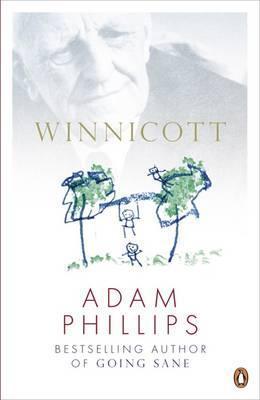
“Winnicott says somewhere that health is much more difficult to deal with than disease. And he’s right, I think, in the sense that everybody is dealing with how much of their own aliveness they can bear and how much they need to anesthetize themselves. We all have self-cures for strong feeling. Then the self-cure becomes a problem, in the obvious sense that the problem of the alcoholic is not alcohol but sobriety. Drinking becomes a problem, but actually the problem is what’s being cured by the alcohol. By the time we’re adults, we’ve all become alcoholics. That’s to say, we’ve all evolved ways of deadening certain feelings and thoughts.”
Music is prior to cognition, and hits you at pre-cognitive (or affective) level, accessing the primitive bits of your brain. That’s why it’s more powerful than language, which needs cognitive digestion:
“The emotional impact of music is so incommensurate with what people can say about it, and that seems to be very illustrative of something fundamental—that very powerful emotional effects often can’t be articulated. You know something’s happened to you but you don’t know what it is.”
The limitations of change and living: “I only mean that it takes for granted that an awful lot of human suffering is simply intractable, that there’s a sense in which character is intractable. People change, but there really are limits. One thing you discover in psychoanalytic treatment is the limits of what you can change about yourself or your life. We are children for a very long time.“
About the compulsiveness of sense-making especially among the educated people: “There are some areas where it’s useful to make meaning, and there are other areas of one’s life where the making of meaning is a way of preempting an experience.”
The sign of good relationships: “I think for Winnicott it would be the definition of a good relationship if, in the relationship, you would be free to be absorbed in something else.”
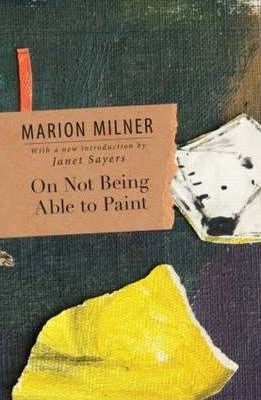
She defines two ways of perceiving — narrow attention and wide attention — with the latter one described as “to attend to something and yet want nothing from it”, because expectancy might be an obstruction to one’s power of seeing which was particularly active in the sphere of emotion. Expectation stems from implicit standards we automatically aggregated after blindly picking up cues from our social and cultural environments. And it could take a long time for you to realize any standard was there and you’re judging your reality against measurements not formed on your own (“in the face of the hard facts of imperfections it set me all sorts of impossible standards without my knowing it”). Only by sweeping all those ideas from your mind can genuine, real experience flood in.
The observation of her own thoughts revealed that the de fault position of human thought is childlike thought, characterized by taking things at their face value (“I seemed very liable to assume that because something was said it must therefore be true”), mistaking symbols for reality they represent (think the word “chair” is actually chair the thing itself), equaling thinking with doing (“as if by thinking hard enough what I ought to have done, I could undo the mistake and make it as though it had not happened”) and inability to see the existence of other point of views (“oneself is something absolute and special”). The transition from childlike thought to a more mature position takes place as the result of opposition. You eventually find the world doesn’t proceed as you wish or plan.
On the imperative to talk, speak, express thoughts in words — not only because talking is thinking, but also it’s curative (“with the deliberate speaking of my thoughts to myself, in words, they lost their obsessive quality and also my boredom had entirely disappeared”). She was thus convinced of the necessity of “continually admitting to myself in words those thoughts I was ashamed of”. “It was only when I had admitted to myself deliberately in words what I wanted, that I was able to accept the fact I had not got it”. But then, you need to overcome a general dread of putting things in words for fear of what might be disclosed.
The suggestions she made for herself take into account the great, yet underestimated role of the unconsciousness.
(i) The cause of any overshadowing burden of worry or resentment is never what it seems to be. Whenever it hangs over me like a cloud and refuses to disperse, then I must know that it comes from the idea of blink thought and the real thing I am worrying about is hidden from me.
(ii) To reason about such feelings, either in oneself or others, is futile. The only way to deal with those obsessive fears or worries is to stop all attempts to be reasonable and to give the thoughts free rein. In dealing with others, this means just listening while they talk out whatever in their minds, in dealing with the self it means letting my thoughts write themselves.
The recognition of the autonomous unconscious mind relieved the urge (to some degree at least) for compulsive planning and doing. “I was afraid that if I didn’t think, do something according to my own little plan, I’d be lost, sink into a coma of inaction”. And then gradually, “It struck me as odd that it had taken me so long to reach a feeling of sureness that there was something in me that would get on with the job of living without my continual tampering. I suppose I didn’t not really reach it until I had discovered how to sink down beneath the level of chattering thoughts and simply feel what it meant to be alive.” Healthy humans have an intuitive sense of how to live. The right attitude is a continual readiness to look and readiness to accept whatever comes.
The emphasis on the importance of first-hand, direct experience compared to the learned knowledge — I wanted to keep rigidly within the bounds of my own actual observation, to try as far as possible to forget everything I had read, everything I had been told, and to assume nothing that did not emerge out of my own direct experience. ..I had come to the firm conclusion that reading must come after one had learnt the tricks for observing one’s mind, not before; since if it comes before, it is only too easy to accept technical concepts intellectually and use them as jargon, not as instruments for the real understanding of experience.
“I could not by direct effort feel love towards someone, or by direct effort make myself happy.” There is a natural rhythm in development, and it’s not a matter of determination or willing. One could not make oneself grow, one could only by careful observation find out the conditions of growth and attend to these rather than to the hoped-for results.
In the final chapter she concludes “happiness came when I was most widely aware”. Then the task was to become “more and more aware, more and more understanding with an understanding that was not at all the same thing as intellectual comprehension”.
This means “seeing through my own eyes instead of at second hand”.
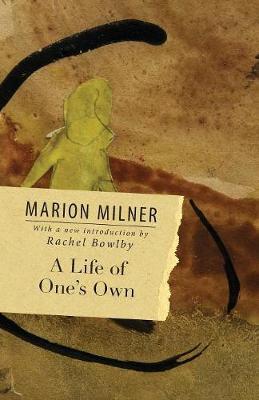
I can’t believe it took me so many years to discover Marion Milner (via Adam Phillips) — an English psychotherapist born more than a century ago but so accurately speaking my mind. Almost devoured her first book — a diary she kept for seven years from age 27, with the sole purpose of catching daily “highlights” in order to see “whether I could discover any rules about the conditions in which happiness occurred”.
What she found, with her intense gaze both into and outwards herself, was much greater and profounder than that — it’s a method “for discovering one’s true likes and dislikes, for finding and setting up a standard of values that is truly one’s own and not a borrowed mass-produced ideal”. For what’s really easy, is to “blind one’s eyes to what one really likes, to drift into accepting one’s wants ready made from other people, and to evade the continual day to day sifting of values.” It’s not easy to know just what one’s self is; it’s far easier to want what other people seem to want and then imagine that the choice is one’s own.
Throughout the experiment, the emphasis on ”lived experience” rather than mere “intellectual understanding” very much echos my own findings, which only came painfully and slowly. “It took me years to learn that I must never begin my search by looking in books, never say, ‘I know too little, I must read some more before I start,’ but that I must always observe first, express what I observed, and then, if I needed it, see what the books had to say.”
The act of seeing is more important than what’s seen. The act of looking itself changes the significance of what is observed, and the significance itself may only be found long after the event or its first recording. There are a multitude of ways of perceiving, ways that are controllable by “what I can only describe as an internal gesture of the mind” — a great phrase to describe finessing those small movements of the mind. One of the gestures she described was — “simply to press my awareness out against the limits of my body till there was vitality in all my limbs and I felt smooth and rounded”. This is learning by the senses, not by the head — “let the senses roam unfettered by purposes” and “feel its ‘thingness’ and the thrust of its shape”.
“I want, not knowledge, but experience of the laws of things, to suffer them, not only to observe them. To apprehend with regard to things I come across – the necessity of their being, what immutable laws make them what they are, their physics and chemistry and actuality, to feel it…Knowing is no good unless you feel the urgency of the thing. Maybe this is love; your being becomes part of it, giving yourself to it.”
Many observations on her roaming thoughts and how to deal with it. “Leave it free to follow its own laws of growth, my function being to observe its activities, provide suitable material to enchannel them, but never to coerce it into docility.” “I must never push my thoughts nor let it drift. I must simply make an internal gesture of standing back and watching, for it was a state in which my will played policeman to the crowd of my thoughts, its business being to stand there and watch that the road might be kept free for what ever was coming.”
“So I began to have an idea of my life, not as the slow shaping of achievement to fit my preconceived purposes, but as the gradual discovery and growth of a purpose which I did not know,” She writes. “It will mean walking in a fog for a bit, but it’s the only way which is not a presumption, forcing the self into a theory.”
“I could only get the most out of life by giving myself up to it… I began to want intensity, not extensity, to look for quality, not quantity, in living.” More concretely, she wanted to “plumb to the depths of human experience” and to “make discoveries about human beings, to know what they are.”
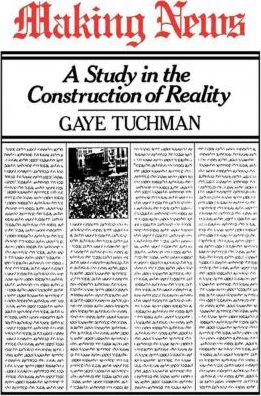
The original reason why I chose journalism over others as my profession some 20 years ago was, back then, I was convinced by means of which I could access Truth. Or at least Knowledge. I have a very different take regarding that matter now, and the rereading of Gaye Tuchman’s “Making News — A Study in the Construction of Reality” secured the final nail on the coffin. It explodes the news professionals’ clam to produce veridical accounts of social life.
The central idea here is representation and how it comes about. Just like (good) maps are only representative of terrains but not terrains themselves, news also belongs to the category of representation, or in author’s word: frame. The view seen via the frame depends on the placement, size and nature of the frame. Frames turn mere occurrences into a discernible event. Frames organize strips of the everyday world. Frames both produce and limit meaning. This reveals the vulnerability of streams of experience to framing devices. “Events” are codified apart from the contexts in which they originally developed — this very procedure thus renders phenomena as objective historical givens, giving them “the taken-for-grantedness” quality.
News makes claim to truth, or at least facticity, via method that can be understood as “natural realism” or “naive empiricism”. Through which, the information is transformed into objective facts — facts as a normal and natural description of a state of affairs. But unlike more rigorous and reflective approaches to facticity (science, for example), newswork is a practical activity geared to deadlines. Facts must be quickly identified and neatly presented. New angles must be found the very next day to deliver what’s essentially the same, continuing thematic story. The tempo of newswork mandates an emphasis on events, not issues, because the latter are analytical by nature and don’t fit neatly into structured daily practices. Journalistic treatment of the day’s events as discrete facts obscures the structural linkages between events, and serves only to present surface reality, but not reveals any structural necessities.
The magic formula to “make news” is, members of social movements have to “assemble at an inappropriate time in an appropriate place to engage in an accordingly inappropriate activity”. Only so, it’d be categorized by institutionalized professionalism as “news-worthy”.
The institutional nature of news also obscures its non-objectiveness. News is an institutional method of making information accessible to consumers, and thus subject to institutional processes and practices. A range of happenings would be excluded as “not news-worthy” because they lie outside the professional news net routinely cast by the industry, or they don’t readily present themselves as something easily packaged in a known narrative form. “Professional practices serve organizational needs. Both, in turn, serve to legitimate the status quo, complementing on another’s reinforcement of contemporary social arrangements.”
The most powerful conclusion: news as an ideology — a means not to know, a means to obfuscate social reality instead of revealing it. As an alternative form of ideology, which makes the structure of society mysterious by substituting concepts for reality, news systematically treating institutions and norms as social givens or facts. News reinforces this cognitive style of “natural attitude” — accepting the “objective existence” of social phenomena, taking them for granted, viewing them as “normal, natural facts of life” since time immemorial. Thus robbing social actors, however implicitly or subliminally, of incentive to change or transform the status quo. And encouraging a trained incapacity to grasp the real significance of new ideas.
“News, as I have argued, is a social resource whose construction limits an analytic understanding of contemporary life,” Tuchman concludes. “It is valuable to identify news as an artful accomplishment attuned to specific understanding of social reality. Those understandings, constituted in specific work processes and practices, legitimate the status quo.”
But still, “my biases are preferable to yours”. Some social actors have a greater ability to create, impose and reproduce social meanings — construct social reality. Journalists are one group with more power than most to construct social reality.
One would, if not always, want to live various lives. All art forms allow us to live vicariously. So well put by De Beauvoir —
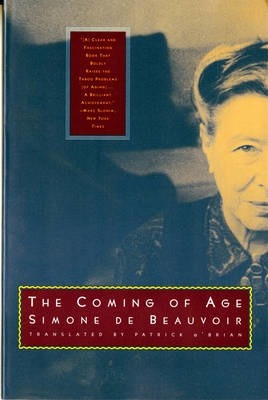
“I’ve had what I wanted, and, when all is said and done, what one wanted was always something else. A woman psychoanalyst wrote me a very intelligent letter in which she said that “in the last analysis, desires always go far beyond the object of desire.” The fact is that I’ve had everything I desired, but the “far beyond” which is included in the desire itself is not attained when the desire has been fulfilled.”
“There is an emptiness in man, and even his achievements have this emptiness. That’s all. I don’t mean that I haven’t achieved what I wanted to achieve but rather that the achievement is never what people think it is. Furthermore, there is a naïve or snobbish aspect, because people imagine that if you have succeeded on a social level you must be perfectly satisfied with the human condition in general. But that’s not the case.”
Saw this from Gide — “the more intimate you are willing to be about the details of your own life, the more universal you are”, and was tempted to resume blogging. Rescue a few intelligible lines from the chaos of consciousness on a daily basis.
If I were younger, I’d greatly admire Simone Weil’s self-imposed moral rigor. In her “First and Last Notebooks”, she listed a score of “temptations to be read every morning”) in an (futile) effort to eradicate them. Poor thing! But that was exactly what I was in my 20s and early 30s. It’s both endearing and saddening to read her list: temptation of idleness (“by far the strongest”, she wrote), temptation of the inner life, allow yourself only those feelings which are actually called upon for effective use or else are required by thought for the sake of inspiration; temptation to dominate, temptation of perversity…
Ah. How ruthless to the self. Almost ouch! — that’s my current reaction.
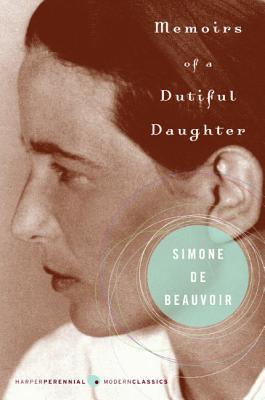
But of coz I clearly remember still how I modeled (or tried to) myself after her great French contemporary de Beauvoir in my early years. Imposed draconian discipline on myself.
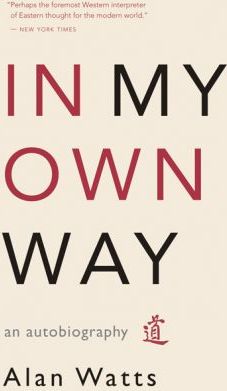
How did I manage to escape from all that? How have I come to feel much more deeply and closer about “non-struggle” ethos best manifested by Alan Watts, an almost antithesis to my adolescent heroines?
“A good life is either the successful negotiation of a more or less preset developmental projects; or it can be something that we make up as we go along, according to our wishes, in endlessly proliferating and competing versions, the unconscious feeding us our best lines.”
“The conflict between knowing what a life is and the sense that a life contains within it something that makes such knowing impossible is at the heart of Freud’s enterprise.”
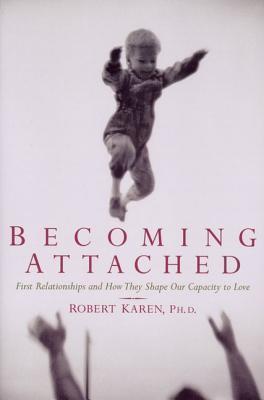
Finished “Becoming Attached — first relationships and how they shape our capacity to love”. Best Attachment Theory book read.
Main takeaways:
1. The pattern and style the child relates to the parents largely shaped the patten and style s/he later on relate to the significant others in life. We have no better choices.
2. The child’s understand of relationships can only be from the relationships he’s experienced.
3. Love is a biological necessity. Every normal human being needs it.
4. The ambivalent child — they are constantly trying to hold on to the mother or to punish her for being unavailable. They think they can get her attention if they plea or make a big enough fuss. They’re widely addicted to the mother. But through it all they do not believe they have what it takes to get what they need from the mother. They tend to emphasize their feelings of helplessness to elicit care. They learn to scan the environment in search of threatening elements that will enable them to become fearful and thereby get attention. This extreme attentiveness saps energy that might be available for play or work.
5. Most ambivalent children are anxious about abandonment. Their attachment antennae are always up and receiving.
6. The avoidant child who is ashamed of being needy may grow up to be a man who is a caricature of independence, unable to ask for help or closeness or even to feel those longings within himself without rising the disintegration of his self-respect.
7. The ability to vicariously experience the feelings of another, is the foundation of attachment and the price we pay for it.
8. Despite our conscious protests and longings, we often prefer relationships that repeat our early experience, no matter how unsatisfying. There is a “natural bias” in favor of what we already know. No matter how painful or unfulfilling it may be, it offers the second-rate security of being familiar.
9. How parents make you feel…will affect your behavior with others in the future.
10. In emotional life, much as in history, we are only doomed to repeat what has not been remembered, reflected upon and worked through.
“Woman, sort it out; what do you want to do?? What do you want to do with your life???”
I don’t have goals; I don’t want to have goals; I can’t be arsed to set goals. Just live. Suck the marrow out of the present moment. Ride the damn wave. Flow. Live and die well.
There is a way to improve the quality of life by purely changing your perception about it. View it differently. Or just allow Life to live you.







 Gracefulrock's Blog