Uproarious Melancholy (Fittingly so…)

“Downhill begins this year,” Samuel Beckett announced with grim satisfaction in 1966. Even this may have been a slip, allowing the possibility of there having been an “up” from which to come down.

Faced with the threatening possibility of hope, Beckett liked to get his retaliation in first. Usually his defences were in place in advance: “All I suppose as well as can be expected by one with my powers of expectations.” Thus armoured, he could allow himself to send his version of a cheery wave from holidays in Italy: “Nothing to tell that’s not better untold. Aches worse than in Paris, weather filthy.”

When having serious trouble with his teeth, he reported that speech and eating were almost impossible, adding with relish “But drink and silence unimpaired.”

“Moments here when it’s not as bad as all that to be not quite dead,” SB wrote. “Now such inertia & void as never before. I remember an entry in Kafka’s diary. ‘Gardening. No hope for the future.’ At least he could garden. “

SB said he had “a strong weakness for oxymoron”. And he is a master of minimalism, way before minimalism becoming a fashionable mob.  But in this sumptuous letter (by his standards) to Barbara Bray, who later became his long-term confidante and lover, SB was almost optimistic (again, by his standards):

“Far from being troubled by your letter I am very touched that you should tell me about your great sorrow. I wish I could find something to comfort you. All I could say, and much more, and much better, you will have said to yourself long ago. And I have so little light and wisdom in me, when it comes to such disaster,  that I can see nothing for us but the old earth turning onward and time feasting on our suffering along with the rest. Somewhere at the heart of the gales of grief (and of love too, I’ve been told) already they have blown themselves out. I was always grateful for that humiliating consciousness and it was always there I huddled, in the innermost place of human frailty and lowliness. To fly there for me was not to fly far, and I’m not saying this is right for you. But I can’t talk about solace of which I know nothing. And beyond all courage and reasonableness I am sure that for the likes of you and me at least it’s the “death is dead and no more dying” that makes it possible (just) to go on living. Forgive this wild stuff, I’m not one to turn to in time of trouble. Work your head off and sleep at any price and leave the rest to the stream, to carry now away and bring you your other happy days.”

A Design for Life

There is no surer way of knowing your emotional state and temperamental tendencies than the sort of music that’s grasped you. The liking one takes to the type of music is somewhat biologically determined. People who have an eclectic music taste, in most cases, don’t know how they exactly feel.

One definitive sign that I’ve just about got my mojo back is, I find I’m able to listen to some fun tunes again. For nearly a year or so, I could only have classical or jazz in the background, while couldn’t even bear the thought of putting on anything else. But now, I’m starting to play the likes of Of Monsters and Men, Spoon, Echo and the Bunnymen, and Manic Street Preachers. I’m on good terms with the Waterboys and the Jam as well (after a long while). And I’ve long been on good terms with Nick Cave. Although not quite ready yet to bring myself to listen to something like Glasvegas…

Propositions

A. Things are always much more muddled than they appear.

B. The repertoire of possibilities is always more extensive than we believe.

C. We often dont know the grounds of our inclinations. We are making choices that we are inclined, by something, to make.

“You Don’t Work the Lake Out”

If dreams still are the royal road to the unconscious …

Was dreaming the other night that I was working out how the centipede works. Had such a lucid, aha moment waking up which shed light for a few seconds on a life-long pattern — I took a mathematical approach to living where everything was rendered in terms of equation. AS IF neat, linear, progressive processes can be identified and ingredients discovered, all major problems can be solved. So dogmatic — almost following-rules-sort-of dogmatic! So lack of trust of organismic forces life itself contains.

When asked by his muse about how to work out a poem, Keats says, “A poem needs understanding through the senses. The point of diving in a lake is not immediately to swim to the shore; it’s to be in the lake, to luxuriate in the sensation of water. You do not work the lake out. It is an experience beyond thought. Poetry soothes and emboldens the soul to accept mystery.”

The centipede never knows how exactly it could manage to coordinate its more than a hundred legs harmoniously to move forward. It’s an inherent, built-in function. Requesting an exact walking formula of a centipede, were it human, would render the creature crazy. Sometimes — maybe most of the times — you don’t need to have prior knowledge in order to proceed. Maybe the keenness in knowing the formula (the so-called thirst for knowledge) is symptomatic, prompted by fear.

Feeling Free

Powerful interview with Michelle Williams in Vanity Fair…I never thought I’d like her (although she’s a fine actor), but now am changing my mind:

“I never gave up on love,” she later tells me, saying that she has spent the 10 years since Ledger’s death looking for the kind of “radical acceptance” she felt from him. “I always say to Matilda, ‘Your dad loved me before anybody thought I was talented, or pretty, or had nice clothes.’ ” I can hear her voice crack. She sometimes can’t believe that she’s found this kind of love, at last. “Obviously I’ve never once in my life talked about a relationship,” she says, “but Phil isn’t anyone else. And that’s worth something. Ultimately the way he loves me is the way I want to live my life on the whole. I work to be free inside of the moment. I parent to let Matilda feel free to be herself, and I am finally loved by someone who makes me feel free.

It’s not that at all am partial to the “never-give-up-on-love” cliche. Am not. Am now inclined to proceed my life without using this massively ballooned word ever. It’d be curious to see what people would be saying to each others and doing to each others if the word “love” is culturally banned.

But am very much taken by her phrasing on struggle to be free.

It Takes Time

Naipaul on being a writer:

“The late Philip Larkin—original and very grand, especially in his later work—thought that form and content were indivisible. He worked slowly, he said. “You’re finding out what to say as well as how to say it, and that takes time.” It sounds simple; but it states a difficult thing. Literature is not like music; it isn’t for the young; there are no prodigies in writing. The knowledge or experience a writer seeks to transmit is social or sentimental; it takes time, it can take much of a man’s life, to process that experience, to understand what he has been through; and it takes great care and tact, then, for the nature of the experience not to be lost, not to be diluted by the wrong forms. The other man’s forms served the other man’s thoughts.”

How, then, could I write honestly or fairly if the very words I used, with private meanings for me, were yet for the reader outside shot through with the associations of the older literature? I felt that truly to render what I saw, I had to define myself as writer or narrator; I had to reinterpret things. I have tried to do this in different ways throughout my career. And after two years’ work, I have just finished a book in which at last, as I think, I have managed to integrate this business of reinterpreting with my narrative.

My aim was truth, truth to a particular experience, containing a definition of the writing self. Yet I was aware at the end of that book that the creative process remained as mysterious as ever.”

Then, wonderful summary (if by Proust) on the gap between the person as an author and a private being:

“This method,” Proust writes (in the translation by Sylvia Townsend Warner)—and he is talking about the method of Sainte-Beuve—“ignores what a very slight degree of self-acquaintance teaches us, that a book is the product of a different self from the self we manifest in our habits, in our social life, in our vices.” And a little later on, Proust elucidates: “The implication [is] that there is something more superficial and empty in a writer’s authorship, something deeper and more contemplative in his private life…. In fact, it is the secretion of one’s innermost life, written in solitude and for oneself alone, that one gives to the public. What one bestows on private life—in conversation, however refined it may be…—is the product of a quite superficial self, not of the innermost self which one can only recover by putting aside the world and the self that frequents the world.

Forces of Destiny

Am really lingering on Christopher Bollas’s lines on the nature of life itself for many hours. That consciousness is blind to unconscious development, and that unconscious development is radically destructive.

“You could say: ‘But what is it destroying?’ Perhaps it destroys all mothers and fathers; perhaps the evolution of any self destroys what was formed for us earlier by the mother, or by the father. Perhaps any evolution is going to break the desires of the other. It is then that we create our destiny, and live it. There are objects of desire and objects of hate, object of intimacy and corpses of the expelled; and then, when we look back, in a Sophoclean way, one could say: ‘My God, what have I done? Only now I understand it all.’ And we see that progression as a tragic one, or as the ordinary way in which life is lived, as something unavoidable. Thus, in the notion of existing, or of experience, are the concepts of a ruthless breaking, of an opening up, of a dissemination, of a perilous venture. And, in addition, of something which borders on a kind of reflective faith: a kind of belief, upon reflection, that what’s taken place was unavoidable and essential.”

From Now on,

Am going to describe “love” as such — a form of energy that moves outwards. It emphasizes its biological foundation and the otherness, foretelling the consequential unruliness and unpredictability. This word has long lost any shred of precise meaning.

One definitive sign of psychosomatic forces at work is, most of my best ideas take shape after a good run. The rush of the energy just breaks through all psychic and cognitive barriers and makes connecting of all dots possible. And freest of all associations!

The frame of language, as Wittgenstein argues, cannot effectively extend or reach the realm of sensations. We cant sensibly describe sensations. Then — that’s where music (and perhaps painting) comes in. It directly works on the brain’s affective area, whereas language/words only scratch the cognitive one. That’s also why music, in most cases, is a more powerful medium.

Although the philosophical era of dictum “to live is to be perceived” has long passed, it put its finger on something that really matters. The world comes to us through our awareness. The quality of our consciousness decides the quality of our life. What we perceive, or choose to perceive, affects our life most of time than what’s out there. After all — we cannot step outside our mind. We can choose to live a wider and deeper life by tinkering our perception.

Isn’t this the foundational concept underlying CBT? Your behavior got you into trouble and misery? The cure is to find out (counter-productive) thoughts underneath your behavior and revise them.

American Flirtation vs Continental Affair

In flirtation one does not take risks, one only sustains their possibility. Here is how Freud (brilliantly) describes it:

“Life is impoverished, it loses in interest, when the highest stake in the game of living, life itself, may not be risked. It becomes as shallow and empty as, let us say, an American flirtation, in which it is understood from the first that nothing is to happen, as contrasted with a continental love-affair in which both partners must constantly bear its serious consequences in mind.”

Why is it so difficult for us to really believe that we don’t know what we want ?!

It is a fundamentally useful Freudian insight that we are never coincident with the images we have of ourselves. And in a certain sense there are no selves, only families of images that we sometimes choose to collect as a self-image. Kristeva writes: “Even the soundest among us knows just the same that a firm identity remains a fiction.”

=====

Malcolm Bowie: Psychoanalysis, “is overwhelmingly concerned with the production and transformation of meaning”. Whatever cannot be transformed, psychically processed, reiterates itself. A trauma is whatever there is in a person’s experience that resists useful re-description.

=====

Bollas: the articulation of the self is the transformation of the self; to speak is to become different. Taking Freud seriously involves acknowledging “most of what transpires in psychoanalysis — as in life itself — is unconscious”. The aim is not so much understanding — finding out which character you are — but a freeing of the potentially endless process of mutual invention and reinvention.

For Bollas the so-called mental health, or rather, his version of a good life, entails the tolerance and enjoyment of inner complexity; the ability to use and believe in what he refers to as a kind of “internal parliament”, full of conflicting, dissenting and coercive views. There is no final resolution here but rather a genuinely political and psychic vigilance in the face of the insidious violence of over-simplification.

=====

Commitment to complexity ! How complicated we can allow ourselves to be?! Many people cannot bear the complexity of their own minds and so take flight into the collusive solace of coupledom, or family life, or group allegiance.

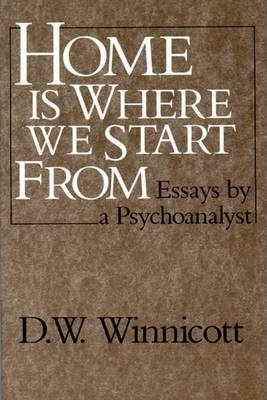
Home Is Where We Start From

I didn’t find D.W. Winnicott by myself. I probably wouldn’t have tracked him down had not both Phillips and De Botton profusely praised him. And it’s all become a small circle after reading M.M., who had worked closely (to say the least) with him back in the days.

As gifted and creative as he was in his analysis, Winnicott fails to register as a superb writer (at least for me). Phillips’s biography on him read much more pleasurable than his own writings did, on many occasions. He left my palette a bit brownish and dry, a stark contrast with Phillips’ work.

The most interesting piece in the collection is “The Concept of a Healthy Individual”. Here, Winnicott’s clarity comes to the full as he categorically rejecting the idea of health as a simple absence of psycho-neurotic disorder. The life of a healthy individual is characterized by fears, conflicting feelings, doubts, frustrations, as much as by the positive features. The main thing is that you feel real and have a sense of self and being. There can be no do before be. “The man or woman feels he or she is living his or her own life, taking responsibility for action or inaction, and able to take credit for success and blame for failure”.

A healthy individual, has a strong sense of aliveness and cuts a good balance between personal idiosyncrasies and external demands (accept the Reality Principle without too much loss of personal impulse). Why balance is needed? Because there is a deterministic basis to life and we’re all subject to our genetic and early-life environmental realities.

Here, luck from your early-life environmental provision plays a key role (whether you’re fortunate to have “a good-enough facilitating environment”). It’s at the early stages of one’s own personal emotional development that the basis of one’s own capacity is being laid down. Your relational (love) template is cemented early on. (The biggest catastrophe has already happened! Alas, what a comforting thought…)

The dynamic of the growth process is, from “nearly absolute dependence” to “independence which does not become absolute”. Autonomy, essentially.  “The central feature in human development is the arrival and secure maintenance of the stage of I AM”.

Another thesis in the collection that resonates is, everyone can live creatively (you don’t have to be an artist). There is nothing that has to be done that cannot be done creatively.  This involves retaining something personal, perhaps secret, that is unmistakably yourself. (Like this blog). “If nothing else, try breathing, something no one can do for you.”

Winnicott offers the best argument against perfectionism — which is pathological by nature — with his “good-enough” concept. That’s his primary contribution to psychoanalysis. “Perfection belongs to machines, and the imperfections that are characteristic of human adaption to needs are an essential quality in the environment that facilitates”.

“If one has been happy, one can bear distress.”

Light Years

James Salter knows how to string a sentence together.

It’s a pleasurable treat to read out his 1975 novel “Light Years” deep at night or in wee hours of the morning. It’s a portrait of marriage and relationships (or the dissolving nature of these human entanglements): unsentimentally sensual, elegantly economical but existentially devastating. Some of the best sex descriptions in a novel — impressionistic but thrilling. Ah, the main axis in our life is a sexual one; the dance steps might change over the course of life-time, but the music essentially remains the same …

A great New Yorker profile on him:

“In conversation, he’s courteous, flinty, guarded, and particular in a way that combines shyness and care. He doesn’t like to be asked things directly.” It says.

“He also conveys the knowledge that it will add up to nothing. Everyone and everything will be forgotten. You come away from his work wondering if you should have lived more, even if living more, in his work, often leads to ruin.”