Can’t sleep again —
“See the stone set in your eyes
See the thorn twist in your side
Sleight of hand and twist of fate
On a bed of nails she makes me wait”

Can’t sleep again —
“See the stone set in your eyes
See the thorn twist in your side
Sleight of hand and twist of fate
On a bed of nails she makes me wait”
Hong Kong is burning
I never thought I’d jot down this line
I’m blessed with prescient gut feelings
Only this time am not sure “blessed” is the right word ;
Hong Kong is burning
I now live close to bullets, tear gas and street fire
I should have foreseen all of these
Only this time I really want to allow myself to be surprised;
Hong Kong is burning
I always resist saying it out loud
I’m sorry to report dear folks
Only this time my heart is a burning, burning cold.

Have been torn between two opposite forces in me — give-in and total abandonment, or teeth-grinding resolve to tough it out on my own.
Thinking of what Charles Bukowski said: “We’re all going to die, all of us, what a circus! That alone should make us love each other but it doesn’t. We are terrorized and flattened by trivialities, we are eaten up by nothing. ”
Would it be for the best if we take a long view of the living business and live it up — getting in touch with what’s really driving us — rather than live it down — just accepting the safe status quo?
Been thinking about Ty’s marital situation after his “regret” statement, which slightly startled me. One of the chief unintended results marriage always manages to achieve seems to shut out alternative modes of living. It certainly suits many people, but the point is, that a singleton as singular as Ty could also get into the institutionalized love, shows this old institution offers something needed at an existential level by human lives.
I more have trouble with the narrowing down of life this sort of nuclear unit entails. So from now on it’s just “US”. The essential trade-off is between security and vitality. If the gift of life is precious enough, we’d fail ourselves and the world at large when we close ourselves off from experiences that have the potential to heighten our sense of being alive. Nothing could be more elemental and vital than a genuine erotic imperative.
Am actually not polyamorous by temperament (some people are, like Lessing, who said she was by nature promiscuous and liked “flitting from flower to flower” and “I cannot imagine myself not loving several people at once in various ways”). It’s more like I’m enamored with the notion of mental and emotional polygamy. Physically, I almost find I like to focus my lustful energies on one single person at a time. Spreading it around equals diluting pleasure. Although the duration varies.
We tell ourselves stories in order to live … We live entirely, especially if we are writers, by the imposition of a narrative line upon disparate images, by the “ideas” which we have learned to freeze shifting phantasmagoria which is our actual experience.
Joan Didion, The White Album
Our greatest illusion is to believe we’re what we think ourselves to be, and there is a coherent, single, core self. We’re way more fragmented and inconsistent than we could ever imagine, and the need to construct a coherent narrative about ourselves and our life stories serves as a sort of “psychological immune system” — to help us maintain a sense of well-being. Call it healthy self-illusion. And of course it could easily go overboard.
This constructed self and self stories…could be “more or less adequate rationalizations and secondary elaborations that convey the gist of our life story in a form suitable for the occasion”, as personality psychologist Robert McCrae intimates. We’re masterful spin doctors, rationalizers and justifiers of threatening information, and can always manage to find ways to reinterpret or even distort negative information to neutralize these threats.
The implicit, scattered antithesis to this explicitly constructed self that serves us in public space is more real. But there is no direct view to it. It has to be inferred, most of times not so accurately.
We also constructed stories (often based on faulty data) to explain our feelings, and these stories are often incorrect. “We can never, even by the strictest examination, get completely behind the secret springs of action” (Kant). Some really interesting lab experiments have shown evidence that, the feelings people report after analyzing reasons are often incorrect, in the sense that they lead to regretful decisions — compared to those in the control group, who just gave their unanalyzed, gut feelings, but turned out better informed in real life. “He who deliberates lengthily will not always choose the best.” (Goethe)
So the real trick is, to gather enough information to develop an informed gut feeling and then not analyze that feeling too much, as psychologist Timothy Wilson put it. We should just let our adaptive unconscious do the job of forming reliable feelings and then trust those feelings, even if we cannot explain them entirely.
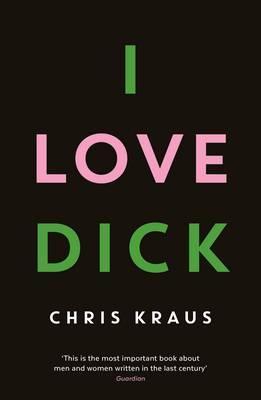
Just like Woody Allen’s flicks can be described as “metaphysical comedy”, I Love Dick is a theoretical fiction that’s fast risen to the pantheon of feminist literature canon. This is a non-linear tale of a literary couple who fictionalize life and surpass the real, by taking turns to write Love Letters to Dick, a colleague of Sylvere, the husband (“a European intellectual who teaches Proust”), after Chris, the wife (“a 39-year-old experimental filmmaker), saw her dinner party flirtation with Dick amounting to “a Conceptual Fuck”.
This singularly-felt spark was nothing short of a miracle for the couple, who stopped having sex long ago and Chris, according to Sylvere, hasn’t been sexually aroused for nearly a decade (In a stroke of genius, Sylvere takes the tone of Charles Bovary and writes to Dick: “Emma and I have been living together for some nine years. Everyone knows what this entails. Passion becomes tenderness, tenderness turns soft. Sex collapses into warm intimacy…the main result was that I never had anymore those glorious hard-ons of yore.”) Starting from there, the lines between fiction and life are increasingly blurred. (“…created you out of nothing, or very little, and in all fairness, you owe us everything. While you flounder in your daily life we have built you up as a truly powerful icon of erotic integrity.”) Dick, a fresh source of desire for both albeit for different reasons, injects a ray of hope into the couple’s stale sex life. As Sylvere writes:
“Our sexuality invested itself in a new erotic activity: writing to you, Dick, I was writing love letters… Emma’s love for you was the final blow to my sexuality. I always knew that however much we denied sex it would one day show its ugly head again, like a snake, and in a sense you were that snake, Dick…But paradoxically, this defeat opened up a new set of possibilities — that Emma, who for so long had been disinterested in sex, was now fantasizing about your prick, Dick, raised the possibility of renewal. If there are Dicks somewhere, there might be dick for us.”
For Chris, by writing all those hopeless letters, she managed to inhabit a position where she could speak with her own voice. As she says:
“My entire state of being’s changed because I’ve become my sexuality: female, straight, wanting to love men, be fucked. Is there a way of living with this like a gay person, proudly?”
“If I’m not touched it becomes impossible to eat. Inter-subjectivity occurs at the moment of orgasm: when things break down. If I’m not touched my skin feels the flip side f a magnet. It’s only after sex sometimes I can eat a little.”
However, I Love Dick can also read as an Anti-feminism novel. Chris found her voice as a writer through her obsessive love for Dick, and through somewhat humiliating sex (eventually!). At the close of the book, Dick finally responds — but by writing directly to Sylvere (and misspells Chris’s name as Kris) — and seems to be only concerned about his friendship with Sylvere might be damaged. To Chris, Dick only sends a xeroxed copy of his letter to Sylvere!
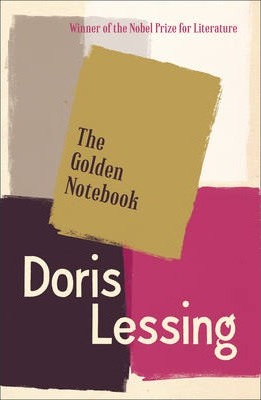
The Golden Notebook, another feminism cult book in its heyday of 60s, ends up achieving as an argument for and against female independence and freedom almost in equal measure. Anna Wulf’s main problems in life are with men, not with her work. One central point of contention in the book is, even sexually liberated “Free” (heterosexual) women are essentially dependent on men to arouse desire and satisfy it. And sexual freedom, if anything, makes women less free not more, because genuine sexual pleasure necessarily engages emotion and generates dependence. The “Free Woman” labeling does feel like mocking from time to time:
“A short story: comic and ironic: A woman, appalled by her capacity for surrounding herself to a man, determines to free herself. She determinedly takes two lovers, sleeping with them on alternate nights — the moment of freedom being when she would be able to say to herself that she had enjoyed them both equally. The two men become instinctively aware of each other’s existence; one, jealous, falls in love with her seriously; the other becomes cool and guarded. In spite of all her determination, she cannot prevent herself loving the man who has fallen in love with her; freezing up with the man who is guarded. Nevertheless, although she is in despair that she is as “unfree” as ever, she announces to both men that she has now become thoroughly emancipated, she has at last achieved the ideal of full sexual and emotional pleasure with two men at once. The cool and guarded man is interested to hear it, makes detached and intelligent remarks about female emancipation. The man she is in fact in love with, hurt and appalled, leaves her. She is left with the man who she doesn’t love and who doesn’t love her, exchanging intelligent psychological conversation.”
There’s this famous passage arguing for vaginal orgasm over clitoral orgasm as something more essential and authentic to female sexuality. Ella, Anna’s alter ego, instantly knows she loves Paul because “she immediately experienced orgasm, Vaginal orgasm, that is”. And “she could not have experienced it if she had not loved him. It is the orgasm that is created by the man’s need for a woman, and his confidence in that need.”
“A vaginal orgasm is a dissolving in a vague, dark generalized sensation like being swirled in a warm whirlpool.” Although clitoral orgasms are “more powerful”, there is “only one real female orgasm and that is when a man, from the whole of his need and desire takes a woman and wants all her response. Everything else is a substitute and a fake.”
WTF?! The hierarchy of female orgasms? For Ella, clitoral manipulating was “an expression of his instinctive desire not to commit himself to her.” And when the love-making shifts to clitoral orgasm, she felt it was the beginning of the end (“when Paul left her”). “In short, she knew emotionally what the truth was when her mind would not admit it.”
I can understand Lessing’s logic about female sexuality and the asymmetry between male and female eroticism — clitoral orgasm can be achieved in a detached fashion (thus inferior) while vaginal orgasm can occur only when the whole body is aroused (likely with emotional involvement). For me, female arousal is located along the border where pleasure and pain are blurred; both clitoral and vaginal orgasm can deliver that state.
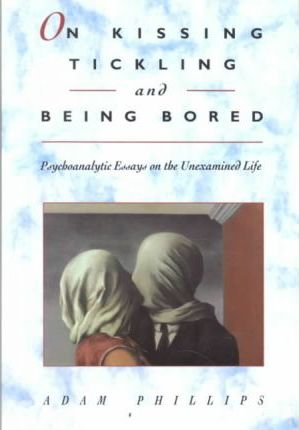
“Desire, by (my) definition, is unprepared; it has not been equipped or instructed or even inspired by the past. It has nothing substantive to recollect or recycle. It could never be, like perverse history, the history of the future; or a story about how history will reward our intentions. It is not a form of prospecting or divination; nor is it a form of wishing as a conventionally transitive act. You can’t exactly wish to be surprised because this would mitigate against the experience of being surprised.”
“So the history of my desiring self would also be a history of pleasurable experiences unwarranted by expectation. It would not, therefore, be a history of my achieved intentions; nor could it be a success story in terms of obligations met and ambitions secured (it would have no truck with the self as predictor or reader of omens and portents). It would be a story that would disfigure my wish (or my talent) for coherent narrative. It would be a story about how my stories were interrupted or broke down or didn’t hang together. It would, to all intents and purposes, be a history of accidents and anomalies; all convincingly pleasurable but of uncertain consequence. Not a history of intentions realigned by circumstance, but a story of lucky coincidences, for which no credit could be taken by anyone (or anything), and from which no resentment could ensue.”
“Need makes perfect biological sense. The demand for love — however exorbitant, however unconscious in sources, and however ironic its consequences — is a consoling and exhilarating and sensible intention for people like us who have heard and overheard so much about love. Need and the demand for love are indeed the queer species of prediction we are born into. But desire is wanting as a species of luck.”
Unable to sleep again. Earworm:
Some say love is a burning thing
That it makes a fiery ring
Oh but I know love as a fading thing
Just as fickle as a feather in a stream
See, honey, I saw love,
You see it came to me
It puts its face up to my face so I could see
Yeah then I saw love disfigure me
Into something I am not recognizing
… …
So some say love is a burning thing
That it makes a fiery ring
All that I know love as a caging thing
Just a killer come to call from some awful dream
And all you folks, you come to see
You just to stand there in the glass looking at me
“For man, the vast marvel is to be alive… Whatever the unborn and the dead may know, they cannot know the beauty, the marvel of being alive in the flesh. The dead may look after the afterwards. But the magnificent here and now of life in the flesh is ours, and ours alone and ours only for a time.” — D.H.L
Feel compelled to have this today:
By W.H.Auden
Time will say nothing but I told you so,
Time only knows the price we have to pay;
If I could tell you I would let you know.
If we should weep when clowns put on their show,
If we should stumble when musicians play,
Time will say nothing but I told you so.
There are no fortunes to be told, although,
Because I love you more than I can say,
If I could tell you I would let you know.
The winds must come from somewhere when they blow,
There must be reasons why the leaves decay;
Time will say nothing but I told you so.
Perhaps the roses really want to grow,
The vision seriously intends to stay;
If I could tell you I would let you know.
Suppose the lions all get up and go,
And all the brooks and soldiers run away;
Will Time say nothing but I told you so?
If I could tell you I would let you know.
Two talks yesterday helped me understand a little further my ambiguous relationship with an academic life. I’m deeply interested in the premises of both of the talks, but left both earlier with a little firmer belief that the decision I made a decade ago was right, more or less.
The key take-away from Paul Cohen’s book talk “A Path Twice Traveled: My Journey As A Historian of China” was nothing about China. I found his academic fixation on King Goujian an ultimate product of the pulling effect of the otherness, and the wide employment of this myth in understanding the Chinese psyche overstated, mildly speaking.
The comfort for my making effort to manage to sit there for more than an hour was, my belief that “there’s no history, only historians” was further confirmed by a professional historian. Historians, as he stated clearly, impose narratives (hence orderly patterns) on reality, which is in nature chaotic. There are no stories to begin with, and they’re constructed by narrative-driven human beings like us.
That’s not saying stories or narratives are not important — quite the opposite, they’re deadly important for us homosapians. We needed these mental structures to orientate us in our species’s very early days…to navigate the forests and mountains in order to locate the food! It’s literally a matter of life and death. However, they’re not the reality. They’re representations of the reality.
The other talk I got myself to yesterday — the cognitive neuroscience of translation — is also something fairly dear to my heart by nature, only to arrive there slightly turned off at the very beginning already by the lackluster looks of both the lecturer and the attendees. None of them seemed thrilled by what’s a deeply thrilling subject matter. I couldn’t tell at all how their studies actually enhanced their lives.
Again, the benefit stemmed from it further confirming a belief that eventually prompted me to drop out of my PhD study some ten years ago — social science research and experiment only confirm the commonsensical perception. You made a huge hassle data-gathering, model-building, writing dry papers and going through peer-reviews, only to prove your initial instinctive understanding.
For example, this Durham University scholar used lots of data to prove “eye fixation indicates AOI (area of interest)” for feck sake! (Note the pretentious acronym to enact an air of significance which would otherwise not exist). If I stared at something for more than 5 mins, I’d better to have some remote interest to justify my attention isn’t it?
Another example (more pretentious initials and acronyms to follow…): L1-L2 (source/mother language to target language) translation requires greater cognitive effort than L2-L1 translation. This is another open door being kicked — every English-speaking Chinese would perhaps know by experience it’s a lot harder to translate Chinese into English than the vice-versa, coz the destination language determines the level of difficulty.
It almost felt like a crime scene and the offense committed here was the killing of pleasure and joy. All those hideous phrases (“eye-tracker”, “galvanic skin response”, “functional magnetic resonance imaging”) served to murder an organic enjoyment every human being would have if not smothered by forceful imposition of importance in the name of science.
I felt quite wounded! While at the same time a secret, quiet sense of relief …
I blurted out these two words
Upon which
An instant knowing smile — melting, illuminating and white-hot
Lit up the dim spot.
Fetching, mixing and shaking
Air suspended, smoke formed.
“May I”? That look in the eyes
“Ahah sure” — like a tacit agreement, somewhat
A puzzle waiting to unravel
It’ll be something fleeting, samba-like, and potentially devastating, of course !
Peeling off layers of my skin, it unveils
Asymmetrical structure
Utilitarianism has never guided me, for better or for worse
Love is a social construct
Atypical — that’s you for me — I somehow only had recourse to my childish provocation, but you’re a child too!
Regret has been a raging flame, hard to smother
Mother’s death only detoured that path of longing
Sex is the axis around which life turns — I couldn’t agree more
(Tomintoul turns out to be the spirit to nurture this verse)
Running is your specialty, for better or for worse
Off to an island that doesn’t have a pulse (but a reassuring emblem — a protective shelter, a motherly figure, a kind of union — could just do)
Never would I ever believe I could be, um, one day haunted by tattoos
Generally speaking — you’re wrong (and the Horse and the Rider…who is riding who?)




Huxley’s masterful dismissal of narratives:
“The trouble with fiction…is that it makes too much sense. Reality never makes sense. Fiction has unity, fiction has style. Facts possess neither. In the raw, existence is always one damned thing after another, and each of the damned things is simultaneously Thurber and Michelangelo, simultaneously Mickey Spillane and Thomas a Kempis. The criterion of reality is its intrinsic irrelevance.”
Had a rather peaceful day until I saw an unexpected message. The tonality of the day was suddenly altered and an emotional urgency took over under which I had to immerse myself in certain tunes. Have been successfully tiptoeing around those for the past year.
Life has changed for me, to say the least. There is no exact vocabulary for it. The castle of resistance — how elaborately it’s been constructed — was just washed away amid tonal beating on my nerve endings. It did make me feel rather clean.
 Gracefulrock's Blog