
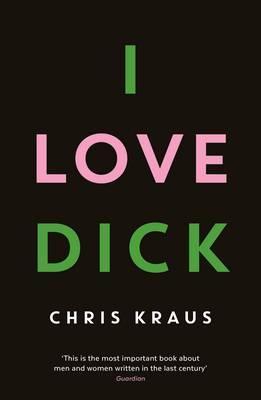
Just like Woody Allen’s flicks can be described as “metaphysical comedy”, I Love Dick is a theoretical fiction that’s fast risen to the pantheon of feminist literature canon. This is a non-linear tale of a literary couple who fictionalize life and surpass the real, by taking turns to write Love Letters to Dick, a colleague of Sylvere, the husband (“a European intellectual who teaches Proust”), after Chris, the wife (“a 39-year-old experimental filmmaker), saw her dinner party flirtation with Dick amounting to “a Conceptual Fuck”.
This singularly-felt spark was nothing short of a miracle for the couple, who stopped having sex long ago and Chris, according to Sylvere, hasn’t been sexually aroused for nearly a decade (In a stroke of genius, Sylvere takes the tone of Charles Bovary and writes to Dick: “Emma and I have been living together for some nine years. Everyone knows what this entails. Passion becomes tenderness, tenderness turns soft. Sex collapses into warm intimacy…the main result was that I never had anymore those glorious hard-ons of yore.”) Starting from there, the lines between fiction and life are increasingly blurred. (“…created you out of nothing, or very little, and in all fairness, you owe us everything. While you flounder in your daily life we have built you up as a truly powerful icon of erotic integrity.”) Dick, a fresh source of desire for both albeit for different reasons, injects a ray of hope into the couple’s stale sex life. As Sylvere writes:
“Our sexuality invested itself in a new erotic activity: writing to you, Dick, I was writing love letters… Emma’s love for you was the final blow to my sexuality. I always knew that however much we denied sex it would one day show its ugly head again, like a snake, and in a sense you were that snake, Dick…But paradoxically, this defeat opened up a new set of possibilities — that Emma, who for so long had been disinterested in sex, was now fantasizing about your prick, Dick, raised the possibility of renewal. If there are Dicks somewhere, there might be dick for us.”
For Chris, by writing all those hopeless letters, she managed to inhabit a position where she could speak with her own voice. As she says:
“My entire state of being’s changed because I’ve become my sexuality: female, straight, wanting to love men, be fucked. Is there a way of living with this like a gay person, proudly?”
“If I’m not touched it becomes impossible to eat. Inter-subjectivity occurs at the moment of orgasm: when things break down. If I’m not touched my skin feels the flip side f a magnet. It’s only after sex sometimes I can eat a little.”
However, I Love Dick can also read as an Anti-feminism novel. Chris found her voice as a writer through her obsessive love for Dick, and through somewhat humiliating sex (eventually!). At the close of the book, Dick finally responds — but by writing directly to Sylvere (and misspells Chris’s name as Kris) — and seems to be only concerned about his friendship with Sylvere might be damaged. To Chris, Dick only sends a xeroxed copy of his letter to Sylvere!
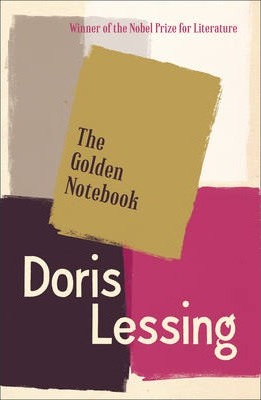
The Golden Notebook, another feminism cult book in its heyday of 60s, ends up achieving as an argument for and against female independence and freedom almost in equal measure. Anna Wulf’s main problems in life are with men, not with her work. One central point of contention in the book is, even sexually liberated “Free” (heterosexual) women are essentially dependent on men to arouse desire and satisfy it. And sexual freedom, if anything, makes women less free not more, because genuine sexual pleasure necessarily engages emotion and generates dependence. The “Free Woman” labeling does feel like mocking from time to time:
“A short story: comic and ironic: A woman, appalled by her capacity for surrounding herself to a man, determines to free herself. She determinedly takes two lovers, sleeping with them on alternate nights — the moment of freedom being when she would be able to say to herself that she had enjoyed them both equally. The two men become instinctively aware of each other’s existence; one, jealous, falls in love with her seriously; the other becomes cool and guarded. In spite of all her determination, she cannot prevent herself loving the man who has fallen in love with her; freezing up with the man who is guarded. Nevertheless, although she is in despair that she is as “unfree” as ever, she announces to both men that she has now become thoroughly emancipated, she has at last achieved the ideal of full sexual and emotional pleasure with two men at once. The cool and guarded man is interested to hear it, makes detached and intelligent remarks about female emancipation. The man she is in fact in love with, hurt and appalled, leaves her. She is left with the man who she doesn’t love and who doesn’t love her, exchanging intelligent psychological conversation.”
There’s this famous passage arguing for vaginal orgasm over clitoral orgasm as something more essential and authentic to female sexuality. Ella, Anna’s alter ego, instantly knows she loves Paul because “she immediately experienced orgasm, Vaginal orgasm, that is”. And “she could not have experienced it if she had not loved him. It is the orgasm that is created by the man’s need for a woman, and his confidence in that need.”
“A vaginal orgasm is a dissolving in a vague, dark generalized sensation like being swirled in a warm whirlpool.” Although clitoral orgasms are “more powerful”, there is “only one real female orgasm and that is when a man, from the whole of his need and desire takes a woman and wants all her response. Everything else is a substitute and a fake.”
WTF?! The hierarchy of female orgasms? For Ella, clitoral manipulating was “an expression of his instinctive desire not to commit himself to her.” And when the love-making shifts to clitoral orgasm, she felt it was the beginning of the end (“when Paul left her”). “In short, she knew emotionally what the truth was when her mind would not admit it.”
I can understand Lessing’s logic about female sexuality and the asymmetry between male and female eroticism — clitoral orgasm can be achieved in a detached fashion (thus inferior) while vaginal orgasm can occur only when the whole body is aroused (likely with emotional involvement). For me, female arousal is located along the border where pleasure and pain are blurred; both clitoral and vaginal orgasm can deliver that state.
 Gracefulrock's Blog