
For Adam Phillips, psychoanalysis is a set of stories that we tell ourselves and each other, a way of redescribing our experiences. “To begin with, one needs to understand,” he says, “but I think the final project is to relieve oneself of the need for self-knowledge. It’s not that it’s useless – in some areas of life it’s very useful – but there are lots of areas in which it isn’t, and in some areas it’s actually preemptive and defensive, and this is where psychoanalysis potentially fails people, by assuming there is an infinite project and that the best thing you can do in life is to know yourself. Well, I don’t think that’s true.”
Good analysis is — “Analysis should do two things that are linked together. It should be about the recovery of appetite, and the need not to know yourself.” Because “how much your wish to know yourself is a consequence of an anxiety state”.
“What psychoanalysis, at its best, does is cure you of your self-knowledge. And of your wish to know yourself in that coherent, narrative way. You can only recover your appetite, and appetites, if you can allow yourself to be unknown to yourself. Because the point of knowing oneself is to contain one’s anxieties about appetite. It’s only worth knowing about the things that make one’s life worth living, and whether there are in fact things that make it worth living.”
This makes me ponder whether P’s rapid withdrawal and even rapider run to an instant family (immediate security) indicate his reflexive resistance to an innate ferocious appetite. The vulnerabilities of which (“I feel I went crazy”, he said) he only knows too well. Thus the compulsive need to regulate appetites (which was actually to regulate fear), and I was part of the appetites he’s trying to suppress in a quest of perceived stability. As Bob Dylan says, “People have a hard time accepting anything that overwhelms them.”
But he can’t see this. And rationalised his choice as stuff-just-happened. Of coz nothing can just happen especially in human relations. The only real spontaneity exists in the physical area — ironically, that’s ours — completely unprepared, unadorned and clicking right from the beginning without any need to “figure out how I feel”. But he can’t see this, blindsided by misguided guilt and to-do-the-right-thing moralistic urge. But who am I to argue against it if the ad hoc action of moral compensation was soothing enough to the actor himself?
“Winnicott says somewhere that health is much more difficult to deal with than disease. And he’s right, I think, in the sense that everybody is dealing with how much of their own aliveness they can bear and how much they need to anesthetize themselves. We all have self-cures for strong feeling. Then the self-cure becomes a problem, in the obvious sense that the problem of the alcoholic is not alcohol but sobriety. Drinking becomes a problem, but actually the problem is what’s being cured by the alcohol. By the time we’re adults, we’ve all become alcoholics. That’s to say, we’ve all evolved ways of deadening certain feelings and thoughts.”
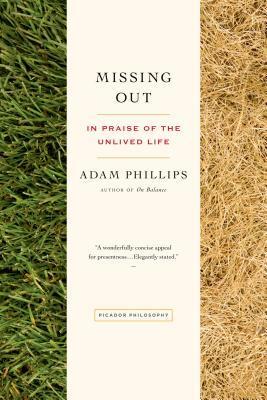

- Music is prior to cognition, and hits you at pre-cognitive (or affective) level, accessing the primitive bits of your brain. That’s why it’s more powerful than language, which needs cognitive digestion:
“The emotional impact of music is so incommensurate with what people can say about it, and that seems to be very illustrative of something fundamental—that very powerful emotional effects often can’t be articulated. You know something’s happened to you but you don’t know what it is.”
- The limitations of change and living: “I only mean that it takes for granted that an awful lot of human suffering is simply intractable, that there’s a sense in which character is intractable. People change, but there really are limits. One thing you discover in psychoanalytic treatment is the limits of what you can change about yourself or your life. We are children for a very long time.“
- About the compulsiveness of sense-making especially among the educated people: “There are some areas where it’s useful to make meaning, and there are other areas of one’s life where the making of meaning is a way of preempting an experience.”
- The sign of good relationships: “I think for Winnicott it would be the definition of a good relationship if, in the relationship, you would be free to be absorbed in something else.”

 Gracefulrock's Blog