A Lion in Winter

Putting away all summer clothes, packing up all those summer memories, taking out winter sweaters, toughing out next couple of months. Change of seasons always makes me sad.

From time to time, I yearn for pure escapism, completely divorced from reality.

Went for a brisk walk on Bowen Road. Glorious sunshine. But like Z said once, winter sunshine doesn’t warm your soul.

Anais Nin: “What we are really suffering from is just a lack of capacity for relationship. The difficulties of relationship have nothing to do with the partner we choose.”

Possessions Diminished by Possession

So why men stray?

Biological need for more sex, sexual variety and opportunistic sex. To boost ego to feel special. For the thrill of the chase. To escape the inevitable existential futility, angst and terror.

Read something from somewhere quoting a transgender man saying: “There’s a significant uptick in casual sex, a lowering of inhibitions, and far more interest in sexual variety…personally, I have noticed I have a new-found ability to completely divorce sexuality from emotional commitment.”

The genesis of love. Nietzsche delivers the cruelest analysis of the human emotion known as “love”. The German said love is born of egoism and actually “may be the most ingenuous expression of egoism”. Two main ingredients of love are desire and lust, which are always seeking after the new, as we tire of existing possessions and crave new attractions. “Possessions are generally diminished by possession.” Brilliantly brutal.

As Idiosyncratic as Fingerprints

Robert Burton called it “gut feeling” — “involuntary mental sensations that function independently of reason”. William James described it as “felt knowledge”, something extraordinarily difficult to be dislodged through rational arguments. I call it “intuitive knowledge”.

Cognitive scientists now seem to believe the bulk of our thoughts originate in the areas of the brain inaccessible to conscious introspection. The trick in Chris Nolan’s “Inception” — the planting of an idea in human mind — if it can ever work, we have to sort out where to plant it first. Thoughts arrive in consciousness already coloured with inherent bias. Our perceptions are filtered through our genetic predispositions, biological differences and idiosyncratic life experiences. Your red is not my red. These differences extend to the very building blocks of thoughts. Thinking may be as idiosyncratic as fingerprints.

Illusion is also a form of perception. If you think you can actually see the world as it is, you are in illusion.

Certainty is not biologically possible. We must learn to tolerate the unpleasantness of uncertainty.

A Matter of Life or Death

Just got to know my good friend’s mom passed away. Life is just a blink and the present moment is all that we got.

Anxiety — the default response to the unknown. All the cultural constructions are necessarily illusory, because the existential position of man is unbearable in the Final Analysis.

Once again detected a relative high level of irritability in my temperament. Almost lost temper to a new colleague yesterday, within a matter of several seconds.

Neuro-plasticity. New catchphrase. I thought the predominant belief is “neurogenetic determinism” — your genes and subconscious are the essential shapers of who you are and how you think and behave. The conscious mind is little more than a self-important figurehead along for the ride.

I just discovered Newton’s First Law of Motion is actually a profound statement of passivity and pessimistic view of life. Look: An object at rest remains at rest and an object in motion remains in motion unless acted upon by an outside force.

No-one, and no-thing, would voluntarily change their status quo. The status quo bias. A fundamental behavioral proclivity to prefer the status quo to change. The change involves a huge amount of incentive, which normal life usually doesn’t provide. One main reason: the prospect of losses looms larger than that of gains of equivalent magnitude.

I remember I expounded this view to Z some three years ago; he concurred, and went on with his way of living.

Headless Youth

The verdict of Milgram experiment was, ordinary people would obey immoral orders. Ordinary people, just like you and me, simply doing their jobs, and without any particular hostility on their part, can actually become agents in a terrible destructive process. We’re capable of becoming evil.

Fanfan reminded me of that scrap of paper I gave her some, gee — must be 10 or 15 years ago, with my handwriting on it: “Reason is, and only ought to be the slave of  the passions. David Hume.” The headless youth!

What comprises human passions? In his last major work, Descartes listed six categories: wonder, desire, love, hatred, joy and sadness. But Descartes was more concerned about how to control passions with acquired skills, which he called “the chief use of wisdom”.

Ordered six books from Amazon.com. Most looking forward to “How Real is Real” by Paul Watzlawick. Out of print actually. The best that the creative mind can do, is to heroically create new illusions.

And also two books on body-mind connections, a topic to which I will devote my amateurish research vigor.

All problems started with Descartes. The radical doubt he set off some 400 years ago still sticks around. All epistemology since then has had to seek to battle the possibility the Great Frenchman raised: There may be no World outside the Self.

Blue Moonlight

Woke up in the early morning again. A light blanket of moonlight was shining through my window. Some similar moments in the past — 20 years ago so exuberant about great books as to handwrite them down in thick notebooks in the wee hours powered by ice coffee, not knowing where I was going but full of hope; some 12 years ago at a shared dorm in Southwest Beijing, toning down desk light to read in the early morning; nine years ago in the first couple of weeks in the U.S., staying on a boat and counting the stars in the early morning, filled with equal amounts of anxiety and hope; five years ago in a smallish HK flat plotting my return to CA and getting up early for a run in Quarry Bay Park nearby…these shreds of memories, are so real and so close. My life is a blink.

So who was the chicken to call off the USS GW-involved joint exercise between Pentagon and Seoul in the Yellow Sea? The 3rd flip-flop over 2 months, which made Pentagon look pretty bad. Someone just said Washington had bigger fish to fry and Seoul was fuming…and am still slightly surprised Beijing seems increasingly able to have its way these days. Just a day ago, Geithner had to meet Wang Qishan at the Qingdao airport for an impromptu meeting. Second time the treasure secretary met with his Chinese counterpart in a makeshift meeting room inside the airport.

There was this meta-analysis on the relations between democracy and economic development (Przeworski and Limongi, 1993) — 21 finds, 8 positive, 8 negative and 5 no relationship. Exactly even. What did that tell you? Democracy doesn’t necessarily make you rich, and dictatorship might just work if you get the mixture right.

My Kindle has arrived. So has that box of wines.

Love Me, Love Me Not

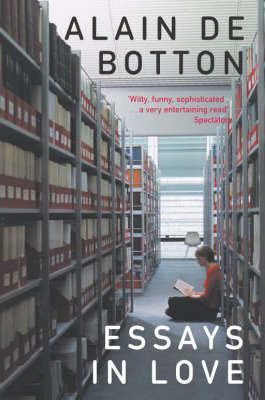
“I doubt if de Botton has written a dull sentence in his life” — a comment from the New Statesman which I could not concur more.

Just finished “Essays in Love” — a plain title but the content is anything but. Misery needs company and am not alone! Not alone in feeling sillily euphoric, pathetically obsessed, loving and resentful in equal measure, and in the end can only sadly sigh over the greatest riddle of life.

Another beautiful end-of-Summer day today. So divine that it hurts.

Ordered half a case of wines from Z’s friend in Lama. One stone two birds.

Last Drop of Summer

Megi spared us. It turned out to be a gorgeous day — crisp and bright. What an irony — we splashed it at least twice.

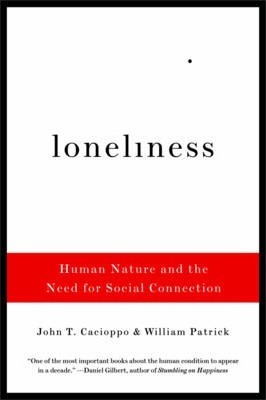
Was reading “Loneliness” at a cafe in the early afternoon. John Cacioppo, the author — social neurologist with University of Chicago — spent some 30 years studying how people make social connections and how important they are to human life. I want it to be scientifically proved that intimacy is a basic human need, and loneliness harms personal well-being. Why would I want to justify my need for human connections? Because I imbibed from my early environments that self-reliance is a virtue. Also tried UCLA Loneliness Scale. Scored 44 — that’s the cut-line for high loneliness.

The author also argues, loneliness has its evolutionary value — it got built into our genes early on, because we survived by being stuck together, and its role lies in, it manifests itself as an acute pain and like any form of pain would make us pause and examine our behavior pattern; this social pain protects us from remaining isolated. It serves like a warning bell. Well, apparently, my warning bell has been singing all the way…

The most alarming bit, is loneliness does get to change, however slowly, the loner’s perception. Through this warped lens of lonely social cognition, others may appear more critical, competitive and denigrating than they really are. We might preemptively launch direct or indirect attack to fend off imaginative opponents. Thus, loneliness impairs our healthy self-regulation system and our ability to detect others’ perspective. Loss of orientation.

Watched a German movie in the afternoon. Fandango. Its mediocrity resulted in my early flee from the AMC cinema. Many references were American — Why?

Now, Now

N once said to me, if you don’t open yourself up, how can other people find you?

The hidden rationale behind my previous silence was Wittgenstein-esque. If only you do not try to utter what is unutterable, then nothing gets lost. But the unutterable will be — unutterably — contained in what has been uttered. Language can’t exhaust human heart, probably not even human experiences. But, it’s an honorable battle.

So am I blogging now.